

Andalusia’s best-known cities feature prominently on the sightseeing itineraries of many cruise passengers: Córdoba is famous for its Mosque-Cathedral in the heart of the old town. But tucked away in its narrow lanes are flowering courtyards that remain hidden from view. It is in these patios that visitors can discover the true soul of this Andalusian city and its residents’ extraordinary passion for plants. “Sometimes I have to move a pot with a new plant three or four times around the courtyard before I find just the right spot for it,” says Araceli Valle López, showing visitors around her patio in Córdoba’s San Basilio neighborhood. “One plant wants morning sun, another prefers the afternoon, and the next doesn’t want any sun at all—just shade.”
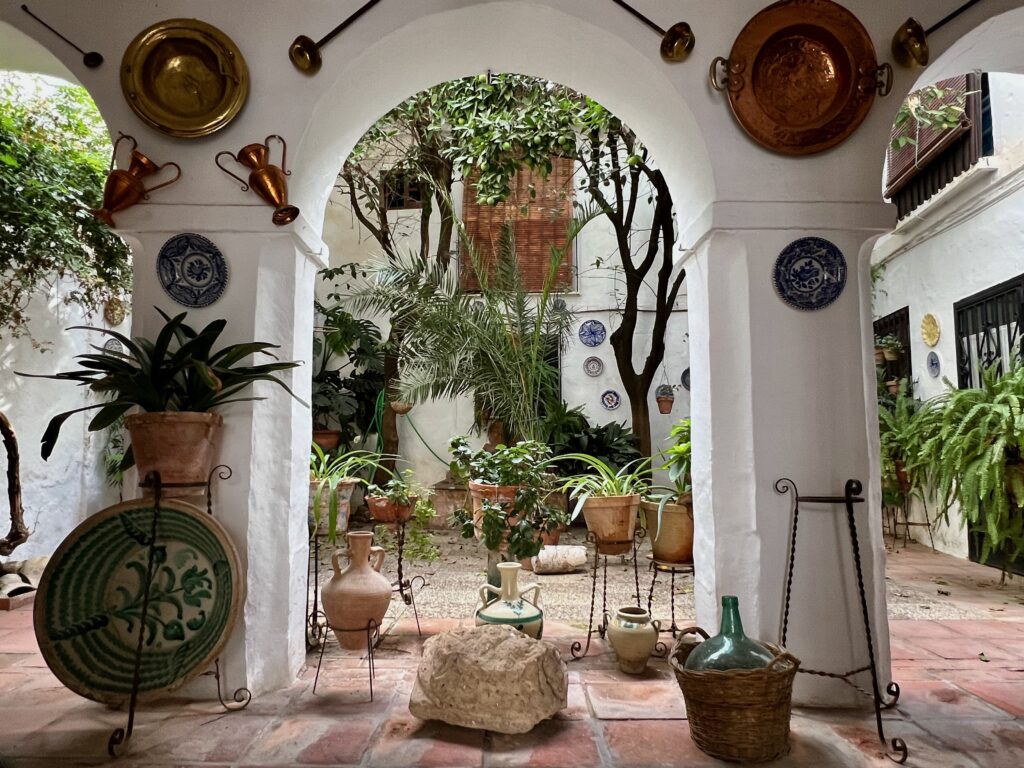
Countless flowerpots filled with different varieties of plants, including begonias, ponytail palms and rubber plants, crowd the private courtyard. Large, rounded pots stand on the ground, while small blue ones hang in neat rows, one above another, along a courtyard wall several feet high.
These leafy courtyards are one of Córdoba’s defining features. For centuries, residents of the old town have tended their plants here, exchanged gardening tips with neighbors and shared cuttings. The patio serves as a gathering place for family and community alike. Visitors can only marvel at these private oases. They are also an ingenious response to the Andalusian climate: thick walls keep out the heat, fountains and pools cool the air, and shade-giving plants soften the intense sunlight.
Fiesta de los Patios: When Córdoba Opens Its Courtyards
Some patios welcome visitors year-round, while others open their gates only during the annual Fiesta de los Patios, held every May. During the festival, guests can wander through flower-filled passageways and dozens of courtyards that are normally hidden from public view.
Much of the appeal lies in the artful arrangements of flowers and plants: cacti growing alongside fuchsias, ferns displayed in antique amphorae, and orchids planted in enamel pitchers. It is a form of folk art executed with a gardener’s precision. In 2012, UNESCO recognized the patio tradition as Intangible Cultural Heritage.
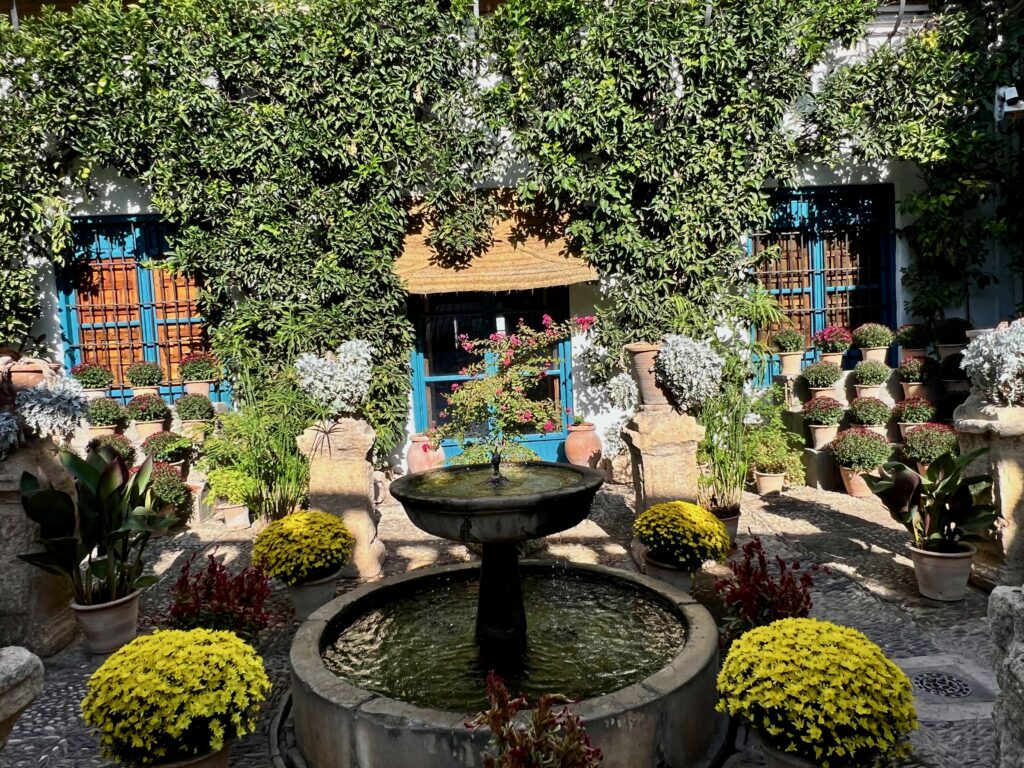
And then there is the fragrance of the flowers that greets visitors the moment they step into a leafy courtyard. It seems almost miraculous that anything can flourish in the scorching heat of an Andalusian summer.
“Only sophisticated irrigation systems make it possible,” says tour guide Isabel Martinez-Richter. “And the techniques have been perfected over thousands of years.” The Romans were already building aqueducts to bring water from the Sierra Morena mountains into the city. After the Moors took control of Córdoba in 711, they developed an extensive network of irrigation channels.
The Mosque-Cathedral: From the Orange Tree Courtyard to a Forest of Columns
Water still trickles through the stone channels of the Patio de los Naranjos, the expansive courtyard of the Mosque-Cathedral, nourishing its orange trees and palms in one of the city’s oldest gardens. Inside this extraordinary landmark, hundreds of red-and-white horseshoe arches seem to rise like trees reaching toward the sky. Construction began in 784, when the building was conceived as a mosque. Following the Christian reconquest, it was converted into a cathedral in the 13th century.
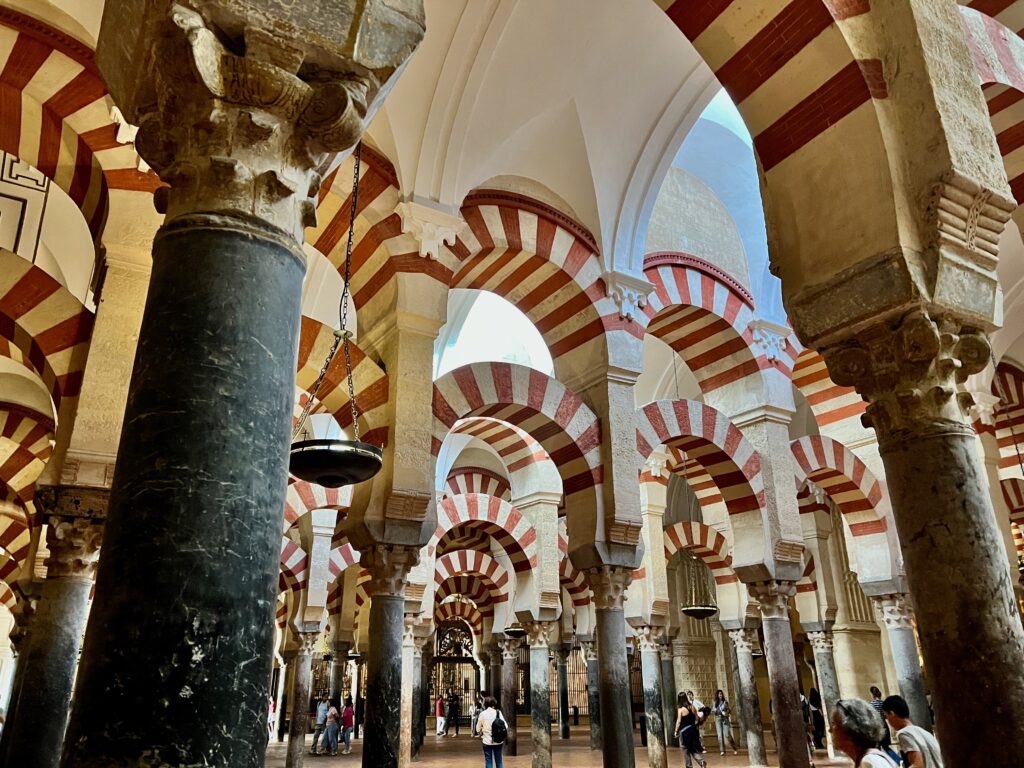
On a guided night tour, visitors find themselves immersed in darkness inside the vast 248,000-square-foot religious complex. The forest of columns takes on an almost otherworldly quality. Subtle, atmospheric lighting brings out the remarkable interplay of Islamic and Christian architectural elements, creating an almost mystical experience.
The Alcázar Gardens by Day and Night
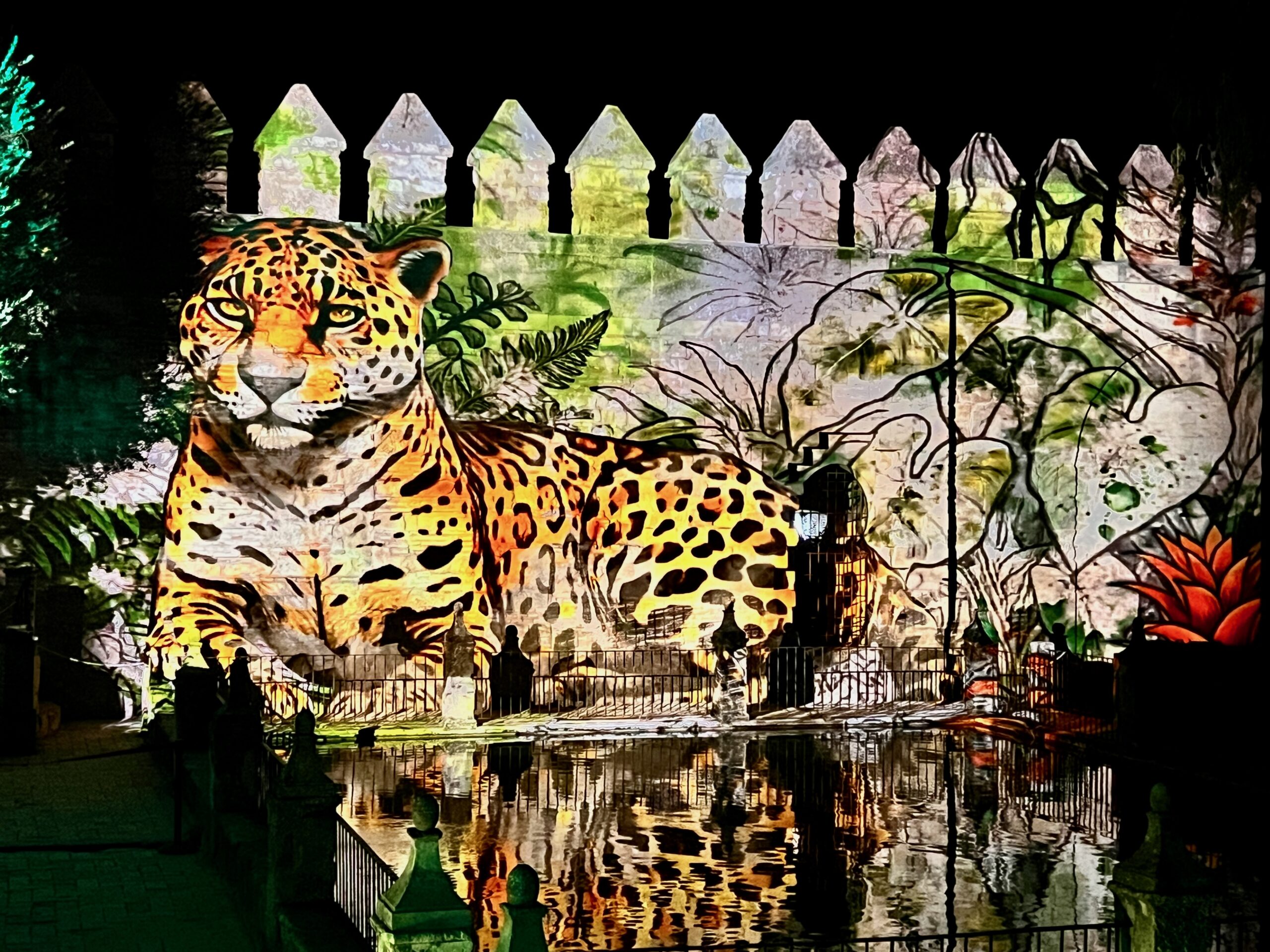
The Naturaleza Encendida light festival, held in the gardens of the Alcázar de los Reyes Cristianos (Alcázar of the Christian Monarchs), offers another journey into a nighttime world of light, color and imagination. Winding paths lead visitors between palms, cypress trees, historic walls and reflective pools, past light installations and projections that transform the historic gardens into a fairytale theatrical setting. Plants appear to glow from within, while towering fountains shoot water into the air in time with the rhythmic music.
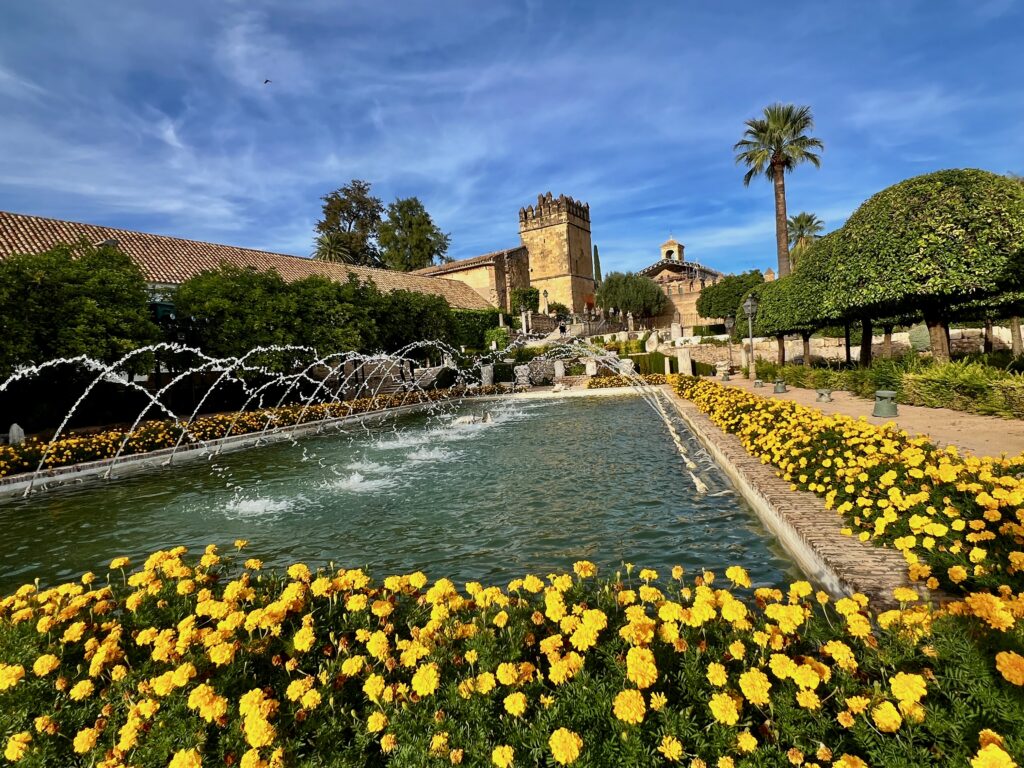
By day, it is the colors of the oleander, jasmine and roses that make the Alcázar gardens so captivating. Viewed from a shady bench, the strictly geometric layout of avenues, cascading fountains, sculptures and pools has a wonderfully calming effect. It is a striking contrast to the lively atmosphere of the old town, with its shops, cafés and restaurants.
Discovering Córdoba: Crossing the Roman Bridge into the Old Town
For cruise passengers exploring Córdoba, the tour often begins with a walk across the Puente Romano, or Roman Bridge, on the way into the old town. The imposing structure spans the Guadalquivir River, which carries little water during particularly dry summers.
Walking across its 16 massive stone arches is like stepping back 2,000 years in time. The bridge also offers impressive views of the city.
Palacio de Viana: Twelve Courtyards and the Flora Festival
The sun is blazing, and visitors are quick to slip through the entrance gate of the magnificent Palacio de Viana and into the cool inner courtyard. A magnificent palm tree stands in the middle of the Patio de Recibo, providing welcome shade. This elegant mansion in the Santa Marina neighborhood remained the home of an aristocratic family until 1982. Today, visitors can explore a museum featuring largely original furnishings and decorative objects, some dating back to the 15th century. Historic furniture, paintings, books, embossed leather wall coverings and tapestries—including examples depicting tropical plants—offer a glimpse into the palace’s former grandeur.
“Córdoba’s residents are well known for their passion for plants,” assures museum guide Raquel Toledano. It comes as little surprise, then, that one of the Palacio de Viana’s 12 courtyards also serves as a venue for the Flora Festival. At the moment, four cloud-like wire sculptures covered with thousands of yellow strawflowers are rotating in the courtyard, mimicking flocks of birds in flight. British artist Hamish Powell won the 2026 Flora Audience Award for the installation.
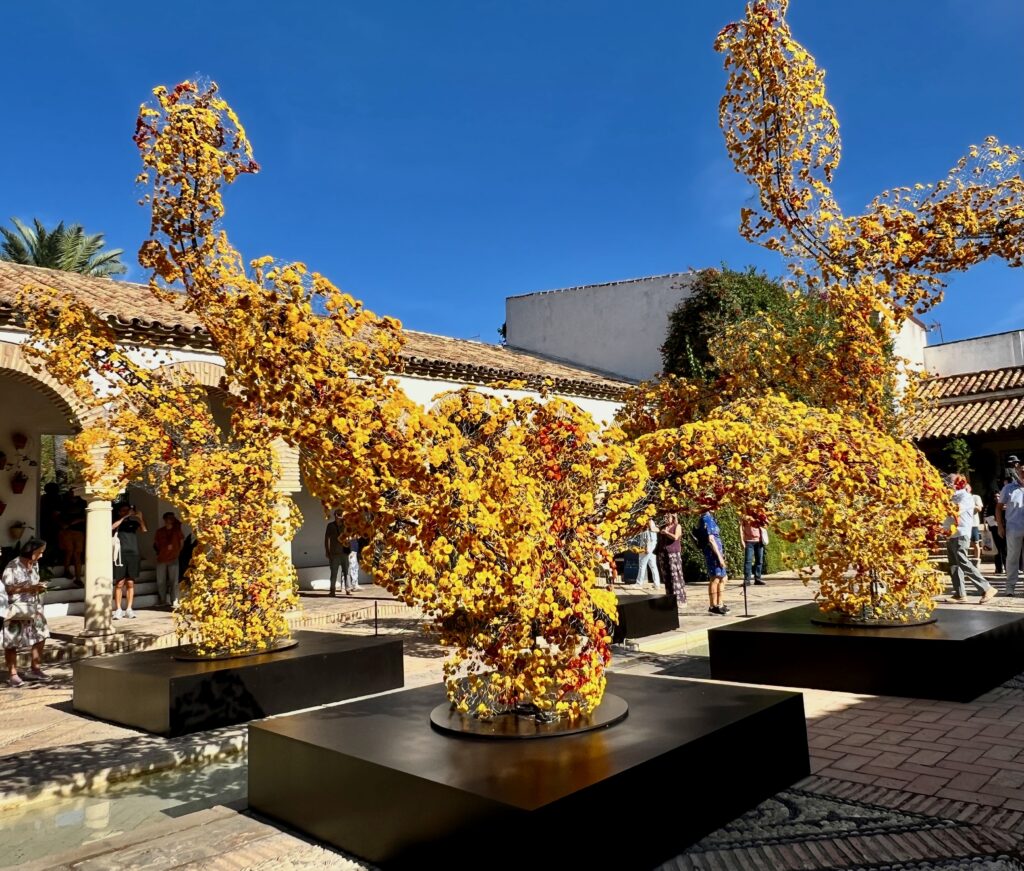
Held annually, the festival showcases contemporary art through temporary, large-scale installations made with plants and other botanical materials. International artists travel to this Andalusian city to create works that express their personal perspectives on the world through natural materials.
Anyone lucky enough to visit Córdoba during the Flora Festival can wander from patio to patio without buying a ticket, discovering imaginative botanical installations that invite reflection and challenge conventional ideas of art.
Madinat al-Zahra: The Palace City on Córdoba’s Doorstep
Gardens have always played an important role in Andalusian culture. This was equally true of Madinat al-Zahra, the “Shining City” just outside Córdoba.
Built by the Moors beginning in 936, this magnificent palace city was inhabited for only about 80 years before its splendor faded. Archaeological excavations did not begin until 1910, gradually bringing the lost city back to light. Today, only about 10 percent of the original complex is visible at the archaeological site. Even so, visitors to this UNESCO World Heritage Site can begin to imagine just how impressive the city must once have been.
Water basins emerge among the ruins, alongside olive groves and date palms, the iconic symbol of the southern landscape. Then, as now, plants were what made life in Andalusia’s scorching climate bearable. Córdoba has long understood their importance—and continues to celebrate the wonders of the botanical world in creative ways.
Travel Tips for Córdoba
Best time to visit the patios: Early to mid-May, when the Fiesta de los Patios takes place and the courtyards are at their most spectacular. The Flora Festival is held in mid-to-late October.
Where to eat: Many of the traditional restaurants in the old town have their own patios, making them particularly atmospheric places to dine. Recommended options include Bodega Campos, La Posada del Caballo Andaluz and Casa Rubio Restaurant. Mercado Victoria, meanwhile, is a food hall housed in a Victorian-style glass pavilion, with a wide range of stalls serving dishes for a quick and casual meal.
Where to stay: For a stylish, centrally located stay, consider the Hotel H10 Palacio Colomera.
 CHILEAN FJORDS AND CAPE HORN: AGAINST THE WIND
 Douro: The Wild Heart of Portugal
 Norway Cruises: Dramatic Fjords, Arctic Wonders and Coastal Charm