

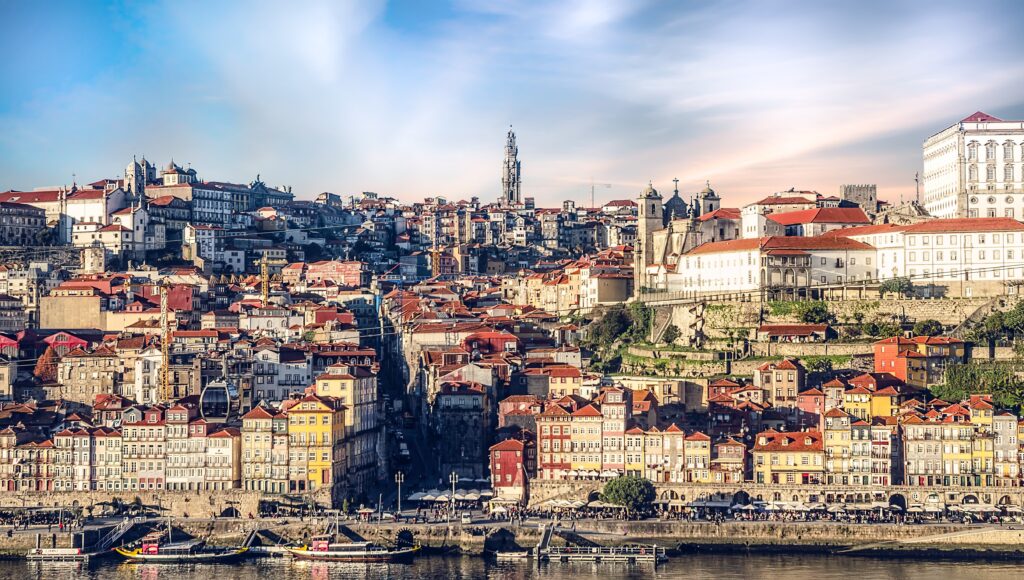
In the warm glow of the evening sun, Porto’s colorful houses shine beneath the imposing cathedral that towers above them. Portugal’s second-largest city stretches along the northern slopes of the Douro River before the waterway empties into the Atlantic. The Romans, who founded the city in 136 B.C., also brought wine to northern Portugal. In the 13th century, new vineyards were planted in the Douro Valley, where Vinho de Lamego, a forerunner of port wine, was produced and shipped downstream to Porto. The term “port wine” first appeared in historical customs records in 1678. Toward the end of the 17th century, growing British demand for wine, coupled with strained relations with France, prompted English merchants to seek exportable wines in Spain and Portugal. According to legend, English traders discovered the delicious drink in a monastery on the Douro. The secret behind this distinctive wine was to add brandy during fermentation, thereby halting the process. The residual sugar from the unfermented grape juice gives port its characteristic sweetness.
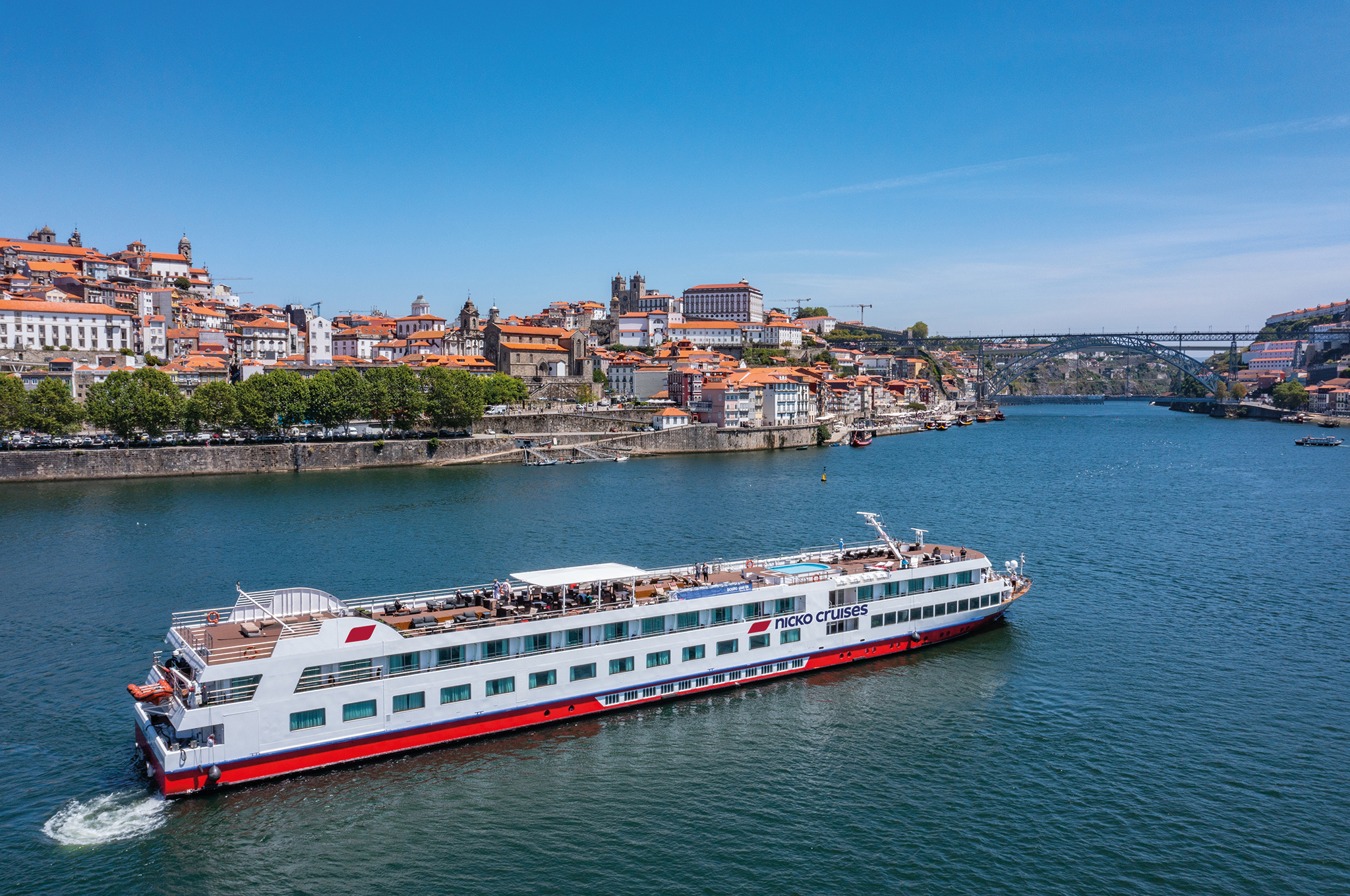
That sweet, heady aroma lingers in the narrow streets of Vila Nova de Gaia, directly across the Douro from Porto. It comes from port wine still maturing in large wooden casks stored in cool stone cellars before being bottled. River cruise ships such as the Douro Queen dock along the waterfront, offering panoramic views of Porto. On the river, the flat, narrow wooden barcos rabelos make a picturesque sight. These traditional port boats carried newly filled casks from the wine estates along the Douro to Porto well into the 20th century. Today, they bob lazily on the water, serving mainly as decorative attractions for tourists. The precious wine now arrives in the city by tanker truck.
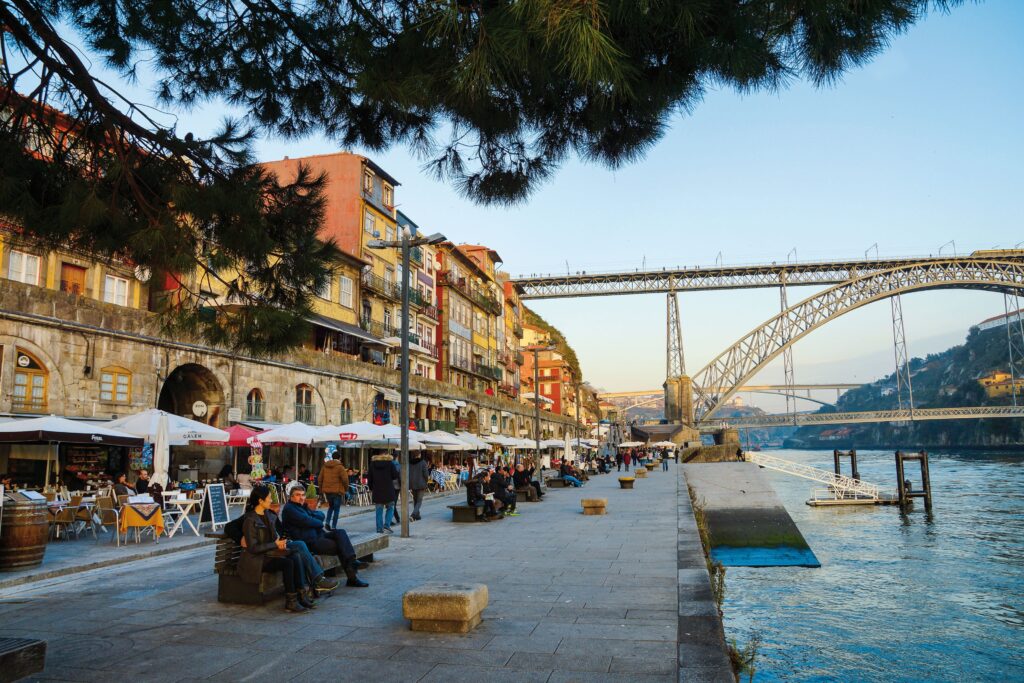
Ahead of the Douro Queen, the steel structure of the Dom Luís I Bridge arches across the river toward Porto. The railway runs along the upper deck, while the lower level is shared by cars and pedestrians. This remarkable structure, its great span suspended above the water, was completed in 1886 by none other than Gustave Eiffel’s engineering company. Since 1996, Porto’s historic buildings and monuments have been part of a UNESCO World Heritage Site. The old town rises from the Douro up a series of hills, its picturesque squares and steep, winding, tightly interwoven lanes lined with closely packed houses. For sweeping views of the city, head to the Torre dos Clérigos, at 75 meters Portugal’s tallest church tower. The 13th-century cathedral and, in particular, the former stock exchange, built in the 19th century, resemble palaces. Both are richly adorned with sculptures, paintings, and frescoes by Portuguese masters. Along Avenida Dom Afonso Henriques, the route leads to São Bento railway station, renowned for its magnificent tile mosaics.
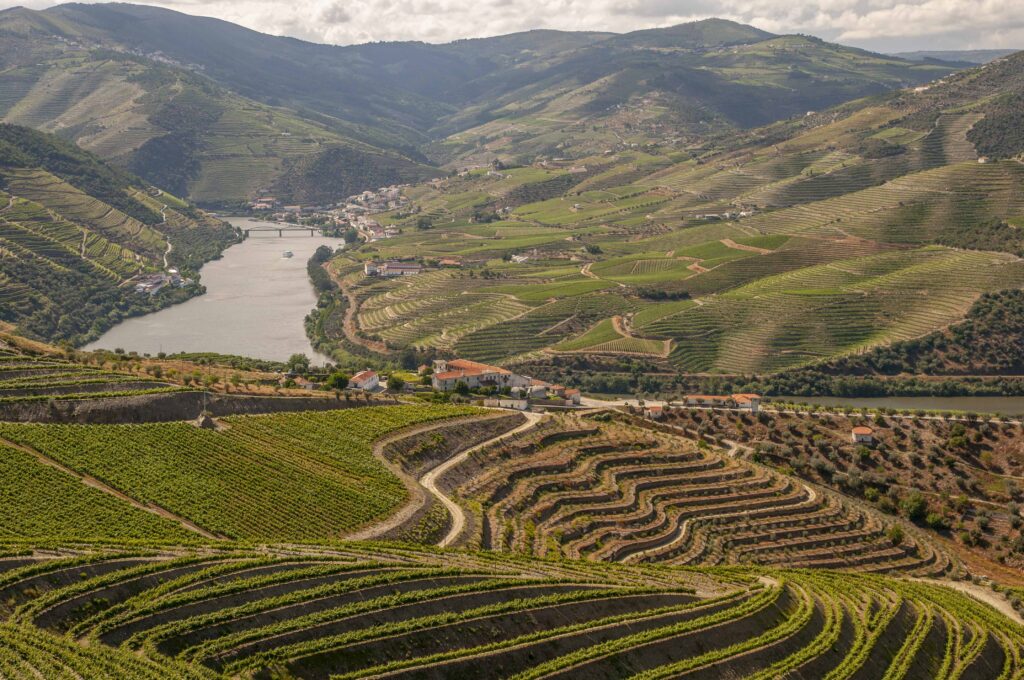
The home of port wine is also one of Europe’s most spectacular river-cruising regions. Once Porto’s picturesque skyline disappears behind the last bend in the river, the banks are lined with pines, cypresses, cork oaks, and even palm trees. The land rises gently, and the first vineyards come into view. Their terraced slopes form a striking contrast with olive groves, almond orchards, and small villages. Between Porto and Régua, the banks of the Douro are more densely populated than elsewhere in the valley. Towns and villages, along with soaring bridges, line the route to the first lock, where the ship is lifted more than 14 meters. The next stop, however, is truly impressive: the Carrapatelo Lock. A massive steel gate rises ahead of the ship, and a curtain of water roars down as the Douro Queen glides into the lock chamber. Once the vessel is inside, the gate descends again like the blade of a guillotine—but in slow motion. The chamber then fills with water until the ship can continue its journey 35 meters higher. The entire operation takes just under half an hour. This 35-meter lift is the greatest change in elevation on the cruise. Because of the river’s steep gradient, only 220 kilometers of the Douro are navigable. In the 1930s, four dams equipped with locks were built to tame the stretch extending toward the Spanish border. Before then, even the first section below Régua was a perilous undertaking for the boatmen transporting port wine in their wooden vessels. Rapids, shoals, narrow passages, and tight bends made the journey an adventure, and precious cargo was lost more than once.
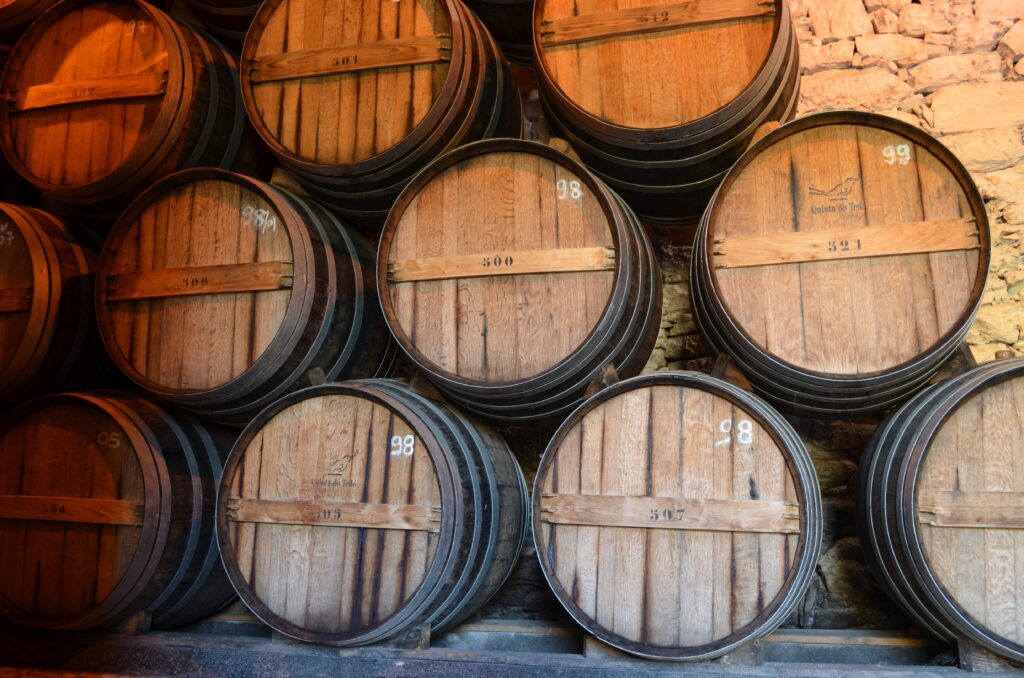
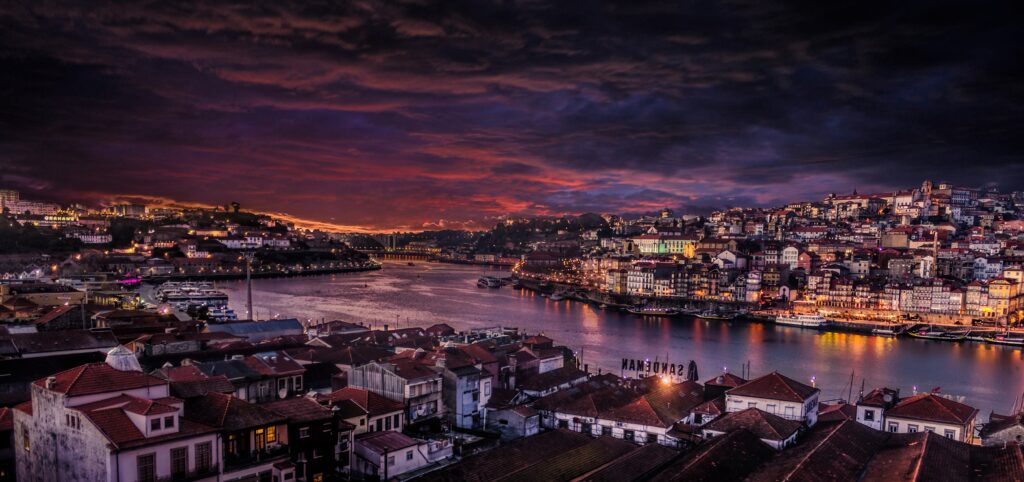
The following morning, the ship passes one of Portugal’s best-known wine estates. The name Sandeman stands out in large white letters above the sweeping vineyard slopes. Here, winemakers wrest a sun-ripened harvest from rugged terrain through painstaking labor. The vines send their roots as deep as seven meters into the schist bedrock. A bus winds its way up narrow switchback roads to a traditional quinta, or wine estate. Perched on a high plateau, the property commands a spectacular view of steep vineyards descending toward the Douro as it flows lazily below. The word quinta is traditionally associated with the fifth of the harvest that workers were once allowed to divide among themselves.
After a tour of the estate’s cellars, the visit concludes with a tasting of three different vintages. Port comes in two principal styles: Ruby and Tawny. Ruby is a robust, fruity blend of younger vintages, with a deep ruby or cherry-red color. After two to three years of aging, it is filtered and bottled. Tawny, by contrast, is transferred into smaller casks for aging, allowing greater exposure to oxygen and accelerating the maturation process. The result is a wine with notes reminiscent of dried fruit and a lighter color. Its hues range from garnet and chestnut to orange-red and brown, eventually fading to pale amber and gold.
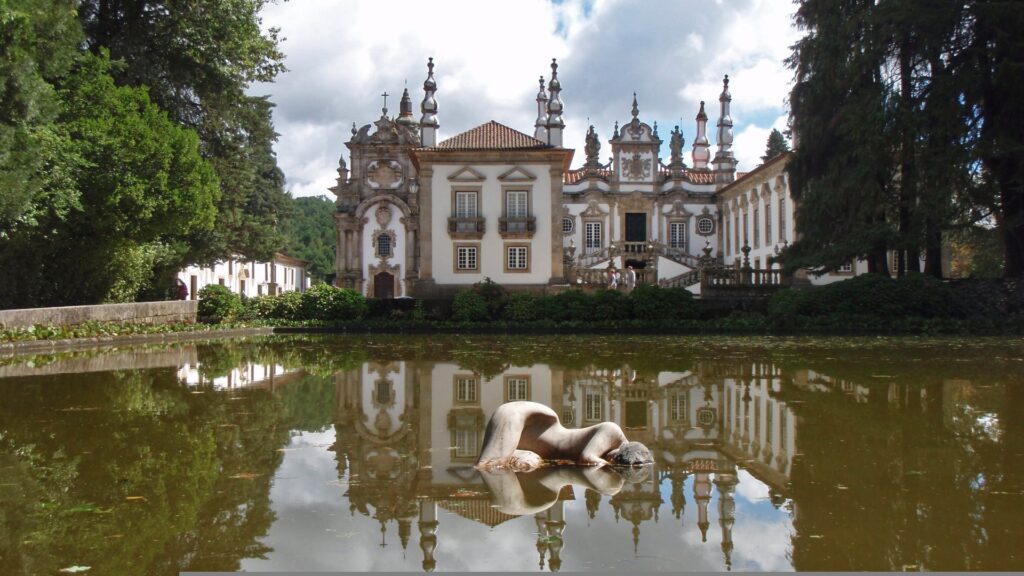
At the next stop, Régua, the excursion follows winding roads through steep vineyard terraces to Vila Real, high in the mountains. There, the 18th-century Mateus Palace stands amid one of Portugal’s most beautiful gardens, with ancient trees, intricately sculpted hedges, and winding paths that resemble a labyrinth. The Baroque palace, with its white stucco façades, impresses with lavishly appointed rooms, elaborate wooden ceilings, and paintings dating from the 17th and 18th centuries.
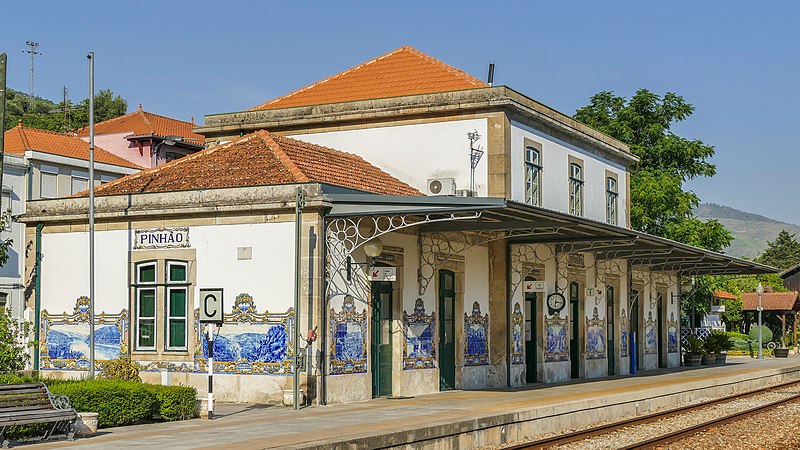
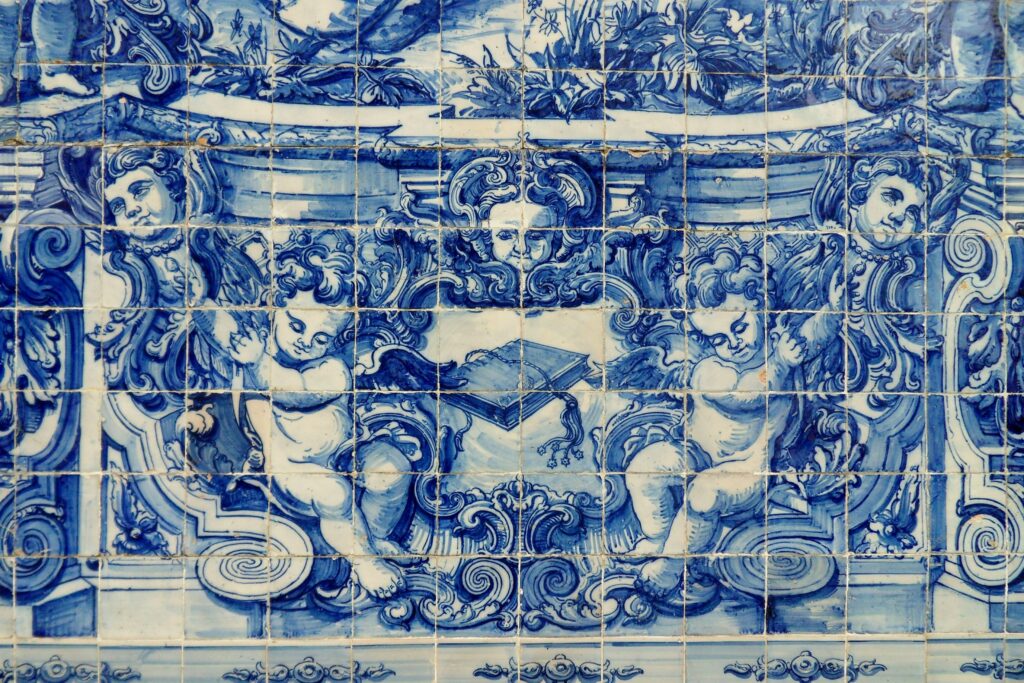
Later, in the village of Pinhão, home to around 700 residents, tourists are drawn to the famous azulejos—the traditional blue-and-white tile panels that adorn many of the buildings, most notably the railway station. Their intricate scenes depict the arduous work of growing, harvesting, and transporting grapes in earlier times, using ox carts, rowing boats, and sailing vessels.
Beyond the village, the river immediately enters dramatically narrow, rocky gorges cut into the schist. A large inscription on one of the sheer rock faces records that blasting work was carried out here in 1780 to create a safe passage for wine boats traveling to Porto. Twenty-five years earlier, 250,000 hectares of vineyard land had been designated as a state-protected region for port wine production. Today, the Douro Valley is a UNESCO World Heritage Site.
The water is dark green and glassy smooth. Cormorants skim just above its surface, while herons and storks watch the ship from the riverbank. Then, almost without warning, the Valeira Lock appears in this otherwise idyllic landscape. It raises the Douro Queen 33 meters to the final navigable stretch of the river, leading to Barca d’Alva. Here, the navigable Douro comes to an end. The river disappears into a long, narrow gorge, forming part of the northeastern border between Portugal and Spain.
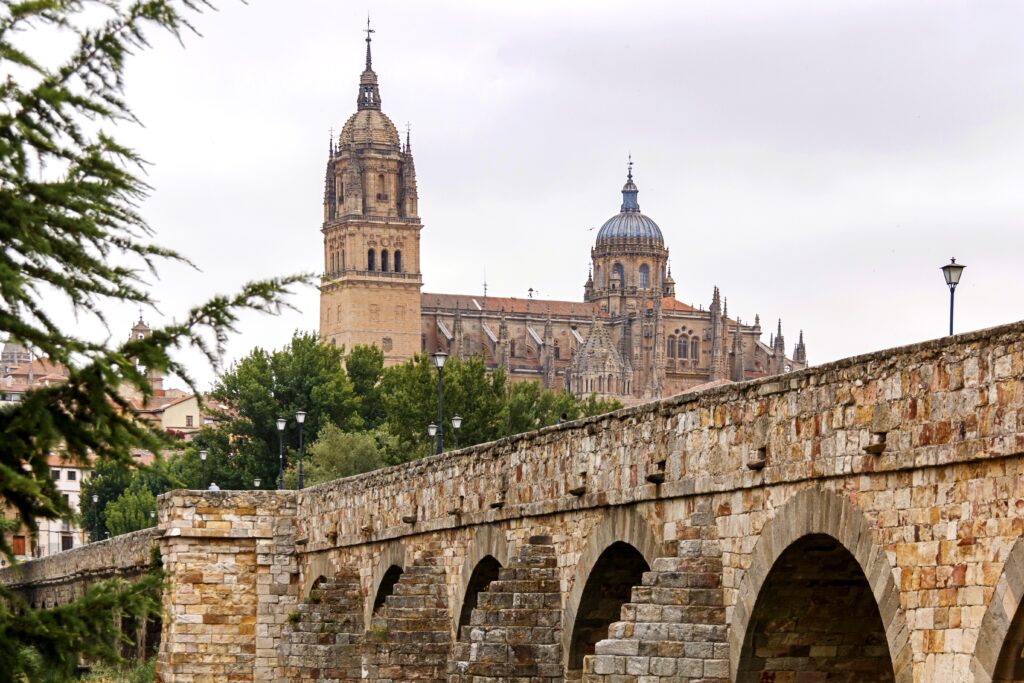
From the border village, a tour bus carries passengers into Spain, to Salamanca, the golden city. The historic center’s buildings are clad in golden sandstone, giving the entire city its distinctive hue. At its heart lies the square Plaza Mayor, surrounded by arcades and widely regarded as Spain’s most magnificent main square. Two cathedrals dominate the skyline: the “new” cathedral, dating from the 16th century, and the Old Cathedral, built in the 12th century. Other landmarks include the Las Dueñas convent, the Casa de las Conchas palace, decorated with more than 300 scallop shells, and, of course, the University of Salamanca. Founded in 1218, it is one of the oldest universities in Europe.
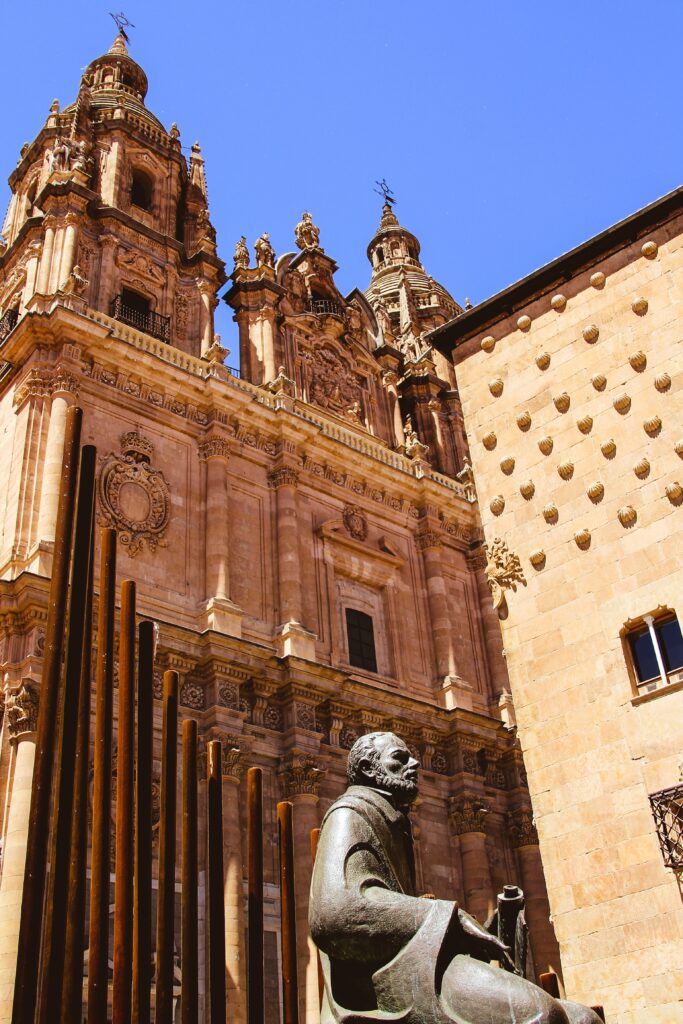
Outside the university portal, visitors search for the tiny frog said to bring students good luck in their examinations. Those who earn a doctorate are traditionally permitted to paint the Víctor symbol on the university’s walls. The red paint used today has replaced the bull’s blood employed in earlier centuries.
On the return journey, the first stop is once again Régua, from where the excursion continues to Lamego, a small town steeped in Portuguese Baroque splendor. Accounts of miraculous healings helped make Lamego a popular pilgrimage destination. A monumental granite staircase with 600 steps climbs toward the pilgrimage church of Nossa Senhora dos Remédios. Flanked by walls adorned with sculptures and elaborate decorative tiles, the staircase leads to the Baroque sanctuary high above the town. Many devout pilgrims seeking forgiveness or salvation make the ascent on their knees.
Back in Porto, the entire afternoon and evening remain free for a leisurely stroll through the city. The Rua das Flores, a shopping street lined with Art Nouveau buildings and small shops, is well worth exploring. Another must-see is Livraria Lello e Irmão, which opened in 1906 and is often counted among the world’s most beautiful bookstores. Its striking wooden staircase, ornate stucco and woodwork, and colorful stained-glass ceiling make it a destination in its own right.
In the evening, one of the atmospheric restaurants across the river in Vila Nova de Gaia is the perfect place to end the journey. From a table overlooking the water, the great arched bridge, the illuminated houses, and the cathedral perched atop Porto’s hill create a memorable panorama—a fitting final image of Portugal’s wild and beautiful Douro Valley.