

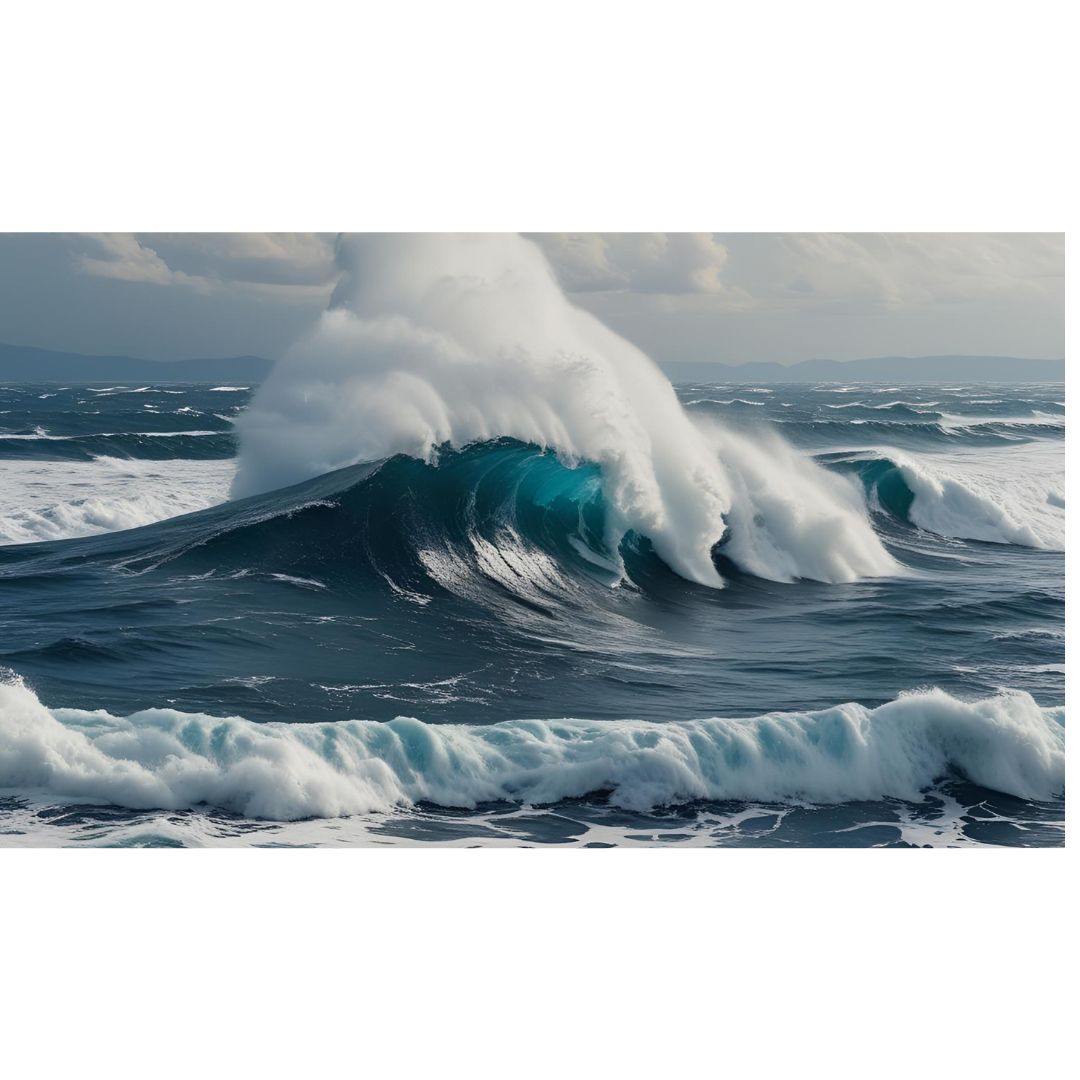
Anyone planning a cruise who is prone to seasickness has probably asked a very practical question: Where is the best cabin to book when the seas get rough? Although modern cruise ships are equipped with powerful stabilizers, there is no way to eliminate the motion of the ocean entirely. When the seas are rough, passengers can still feel the ship moving—and some cabins experience significantly more motion than others.
Why Is There More Motion at the Bow?
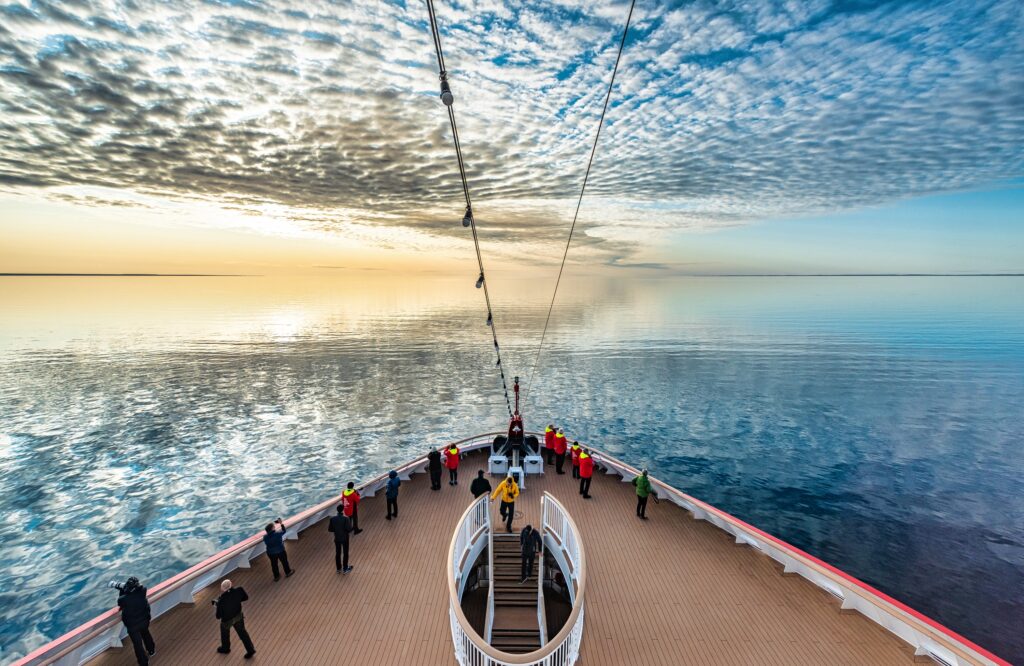
The bow is the front of the ship. As a vessel moves through choppy waters, it is the first part to encounter incoming waves. As the bow rises over a wave and then drops back down, the movement can be particularly noticeable in cabins toward the front of the ship. In rough seas, passengers staying in these cabins may experience pronounced up-and-down motion. Another factor is a movement known as pitching. This occurs when the bow and stern move up and down relative to each other. The farther a cabin is from the ship’s pivot point, the more pronounced this motion can feel.
As a general rule: Cabins at the bow are generally not the best choice in rough seas.
Passengers who are prone to seasickness should consider avoiding the forward section of the ship whenever possible.
What About Cabins at the Stern?
The stern isn’t necessarily the calmest place on a ship, either. Strong movements can also occur toward the back, particularly when the vessel pitches or rolls in large waves. There may also be more noticeable noise and vibration from the engines, propulsion systems, and other mechanical equipment in the aft section. That doesn’t mean stern cabins are inherently uncomfortable. In calm conditions, they can be an excellent choice. However, for passengers who suffer from seasickness, they are generally not the first option to consider when rough seas are expected.
Upper or Lower Decks: Where Is There Less Motion?
The height of your cabin also makes a difference. Here’s another important rule of thumb:
The lower your cabin is located, the less ship movement you will generally feel.
The explanation is relatively simple. Think of a ship as a large object moving on the water. Motion tends to be more pronounced in the upper sections, much like a seesaw: The farther you are from the pivot point, the greater the movement. As a result, a cabin on one of the upper decks may feel significantly more movement in rough seas than a cabin located farther down.
For passengers who are particularly sensitive to motion, the ideal combination is:
Midship + a lower deck = less movement.
That doesn’t necessarily mean you need to book a cabin on one of the lowest decks. The key is to avoid the most extreme positions whenever possible.
Balcony Cabin or Interior Cabin: Which Is Better?
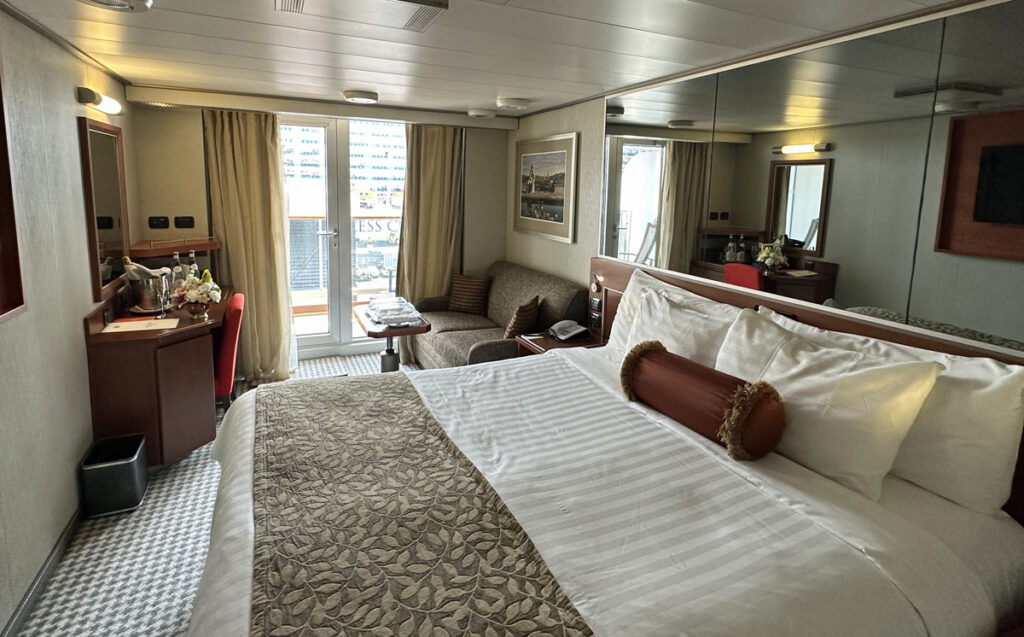
When it comes to choosing between a balcony cabin and an interior cabin, the location matters more than the cabin type itself. A balcony cabin located midship on a lower or middle deck can be an excellent choice in rough seas. By contrast, a balcony cabin at the very front of the ship on a high deck is generally less suitable for passengers prone to seasickness. In other words, where your cabin is located matters more than whether it has a balcony.
The priorities should be:
- A location near the middle of the ship
- A lower or middle deck
- A position away from both the bow and the stern
Only after considering these factors should you decide whether you prefer an interior, oceanview, or balcony cabin.
Is an Interior Cabin Better for Seasickness?
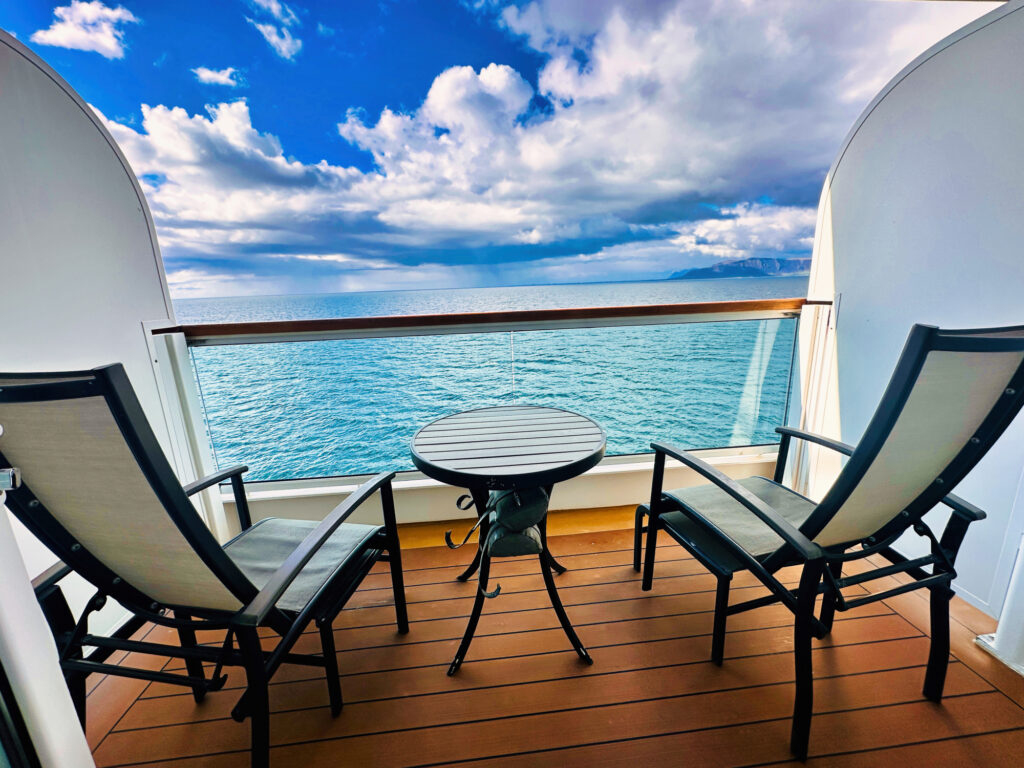
Not necessarily—not because of its location, at least. One potential advantage of an interior cabin is that passengers are less likely to see the movement of the ocean. If watching the water rise and fall makes you feel even more uncomfortable, staying in an interior cabin may help. On the other hand, interior cabins have no windows, meaning you cannot look outside. And that can actually be a disadvantage when you’re feeling seasick. Here’s why: Your body’s balance system detects the ship’s movement, while your eyes may perceive an apparently stationary environment inside the cabin. This sensory mismatch can make nausea worse. Looking at the horizon, by contrast, can help your brain reconcile these conflicting signals. That’s why some passengers find oceanview or balcony cabins more comfortable when they’re feeling seasick.
How Much Difference Do Modern Ship Stabilizers Make?
Modern cruise ships are equipped with sophisticated technology designed to reduce unwanted movement. One important feature is the use of stabilizers, which can extend outward from the hull beneath the waterline. These devices counteract the ship’s rolling motion, helping to prevent it from leaning too far from side to side in rough conditions. This is one reason why a modern cruise ship can feel surprisingly stable even when the ocean is choppy. However, stabilizers cannot eliminate the effects of rough seas entirely. Under certain weather conditions, even the largest cruise ships can experience noticeable movement. How much a ship moves depends on several factors, including wave height, wave direction, wind, currents, and the vessel’s speed.
What Should You Do If Your Cruise Ship Suddenly Encounters Rough Seas?
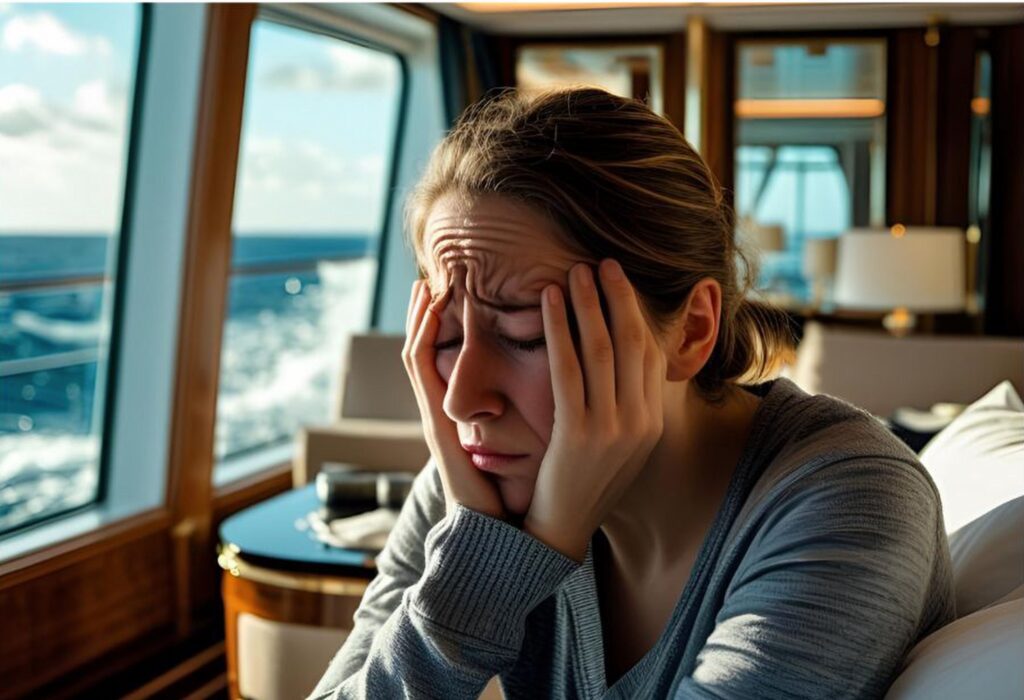
Even if you’ve booked the ideal cabin, you may still encounter rough seas during your cruise. If that happens, spending time near the middle of the ship and on a lower deck can often help. Movement is generally less pronounced there than at the bow, stern, or on the upper decks. Looking at a fixed point or the horizon may also help ease symptoms. If you’re feeling unwell, try to avoid spending too much time reading books or looking at screens. Both can make seasickness worse for some passengers. And if you regularly suffer from severe motion sickness, it’s worth speaking with your doctor or pharmacist before your trip about which preventive measures or medications may be appropriate for you.
The Best Cruise Ship Cabins in Rough Seas: Our recommendation
There is no such thing as a completely motion-free cabin when the ocean gets rough. However, choosing the right location can make a significant difference. For passengers who are prone to seasickness, a cabin located near the middle of the ship on a relatively low deck is generally the best choice.
The good news: Choosing the right cabin can significantly reduce how much ship movement you feel. Three factors matter most: your cabin’s location along the ship, the deck it’s on, and how close it is to the ship’s center. Ultimately, no cabin can eliminate motion entirely, but booking in the right location can make your cruise considerably more comfortable—even when the seas get rough.
The Best Cabin in Rough Seas: Choose Midship and Stay Low
If you’re sensitive to the movement of a cruise ship, there’s one simple rule worth remembering: The closer your cabin is to the middle of the ship and its center of rotation, the less movement you’ll generally feel. In practical terms, a cabin located midship on a relatively low deck is usually your best bet when sailing through rough seas.
Why? A cruise ship doesn’t move equally throughout its entire length when waves hit. Simply put, movement tends to be more pronounced at the bow and stern. Think of a seesaw: The middle moves much less than either end.
On a cruise ship, that means:
- Bow and stern: More noticeable movement
- Midship: Generally less movement
So if you’re prone to seasickness, try to book a cabin as close to the middle of the ship as possible.
 Carnival Sets Its Sights on Smaller Ship Classes
 Seasickness: When the Waves Turn Your Stomach Upside Down
 Royal Caribbean Cruise Ship Classes: A Complete Guide to the Fleet