

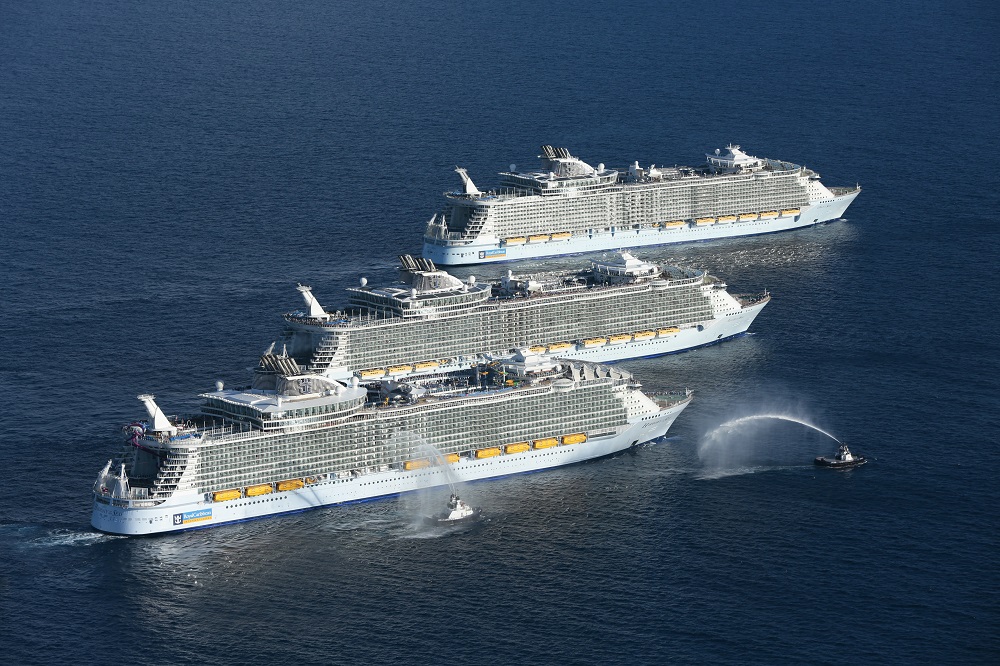
Since its founding in 1968, U.S.-based cruise line Royal Caribbean International has helped shape the cruise industry with its exceptionally large ships, technological innovations, and extensive onboard entertainment offerings.
The fleet is divided into seven distinct ship classes. Ships within each class share a common technical and architectural design, with similar dimensions, stateroom configurations, and recreational facilities. However, individual ships can differ considerably following refurbishments and upgrades. Since the late 1990s, Royal Caribbean has steadily introduced larger ships with increasingly diverse onboard attractions. The Voyager Class debuted the Royal Promenade, the Oasis Class introduced distinct themed neighborhoods, and the Quantum Class placed a greater emphasis on technological innovation. With the Icon Class, the cruise line has taken the concept of a floating vacation resort to an entirely new level. The classes differ not only in size but also in architecture and the type of vacation experience they offer.
The Vision Class – Classic Cruise Ships
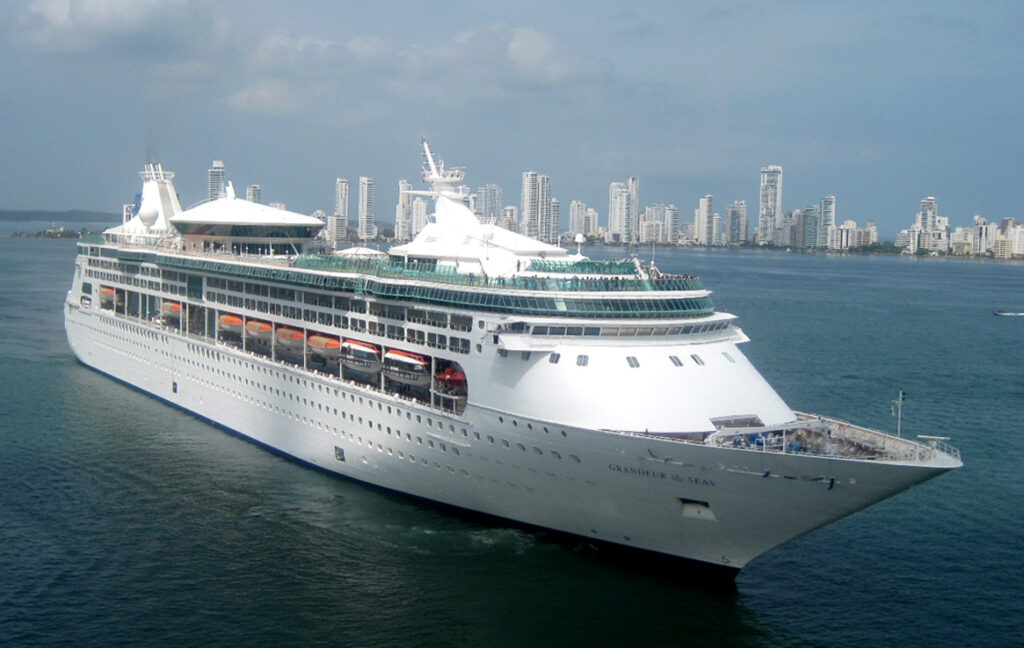
The four ships in the Vision Class entered service between 1996 and 1998: Grandeur of the Seas (1996), Rhapsody of the Seas (1997), Enchantment of the Seas (1997), and Vision of the Seas (1998). They range from approximately 73,000 to 83,000 gross tons and accommodate around 2,000 passengers at double occupancy. Enchantment of the Seas holds a special place within the class because of a subsequent lengthening.
The ships are characterized by extensive window areas and a comparatively traditional cruise ship design. Onboard amenities include restaurants, bars, lounges, theaters, and a solarium with a retractable roof. Rock-climbing walls and miniature golf courses round out the recreational offerings. Rather than focusing on spectacular attractions, the ships offer a more intimate and relaxed atmosphere. They are particularly well suited to travelers who prefer a traditional cruise experience.
The Radiance Class – Light and Ocean Views
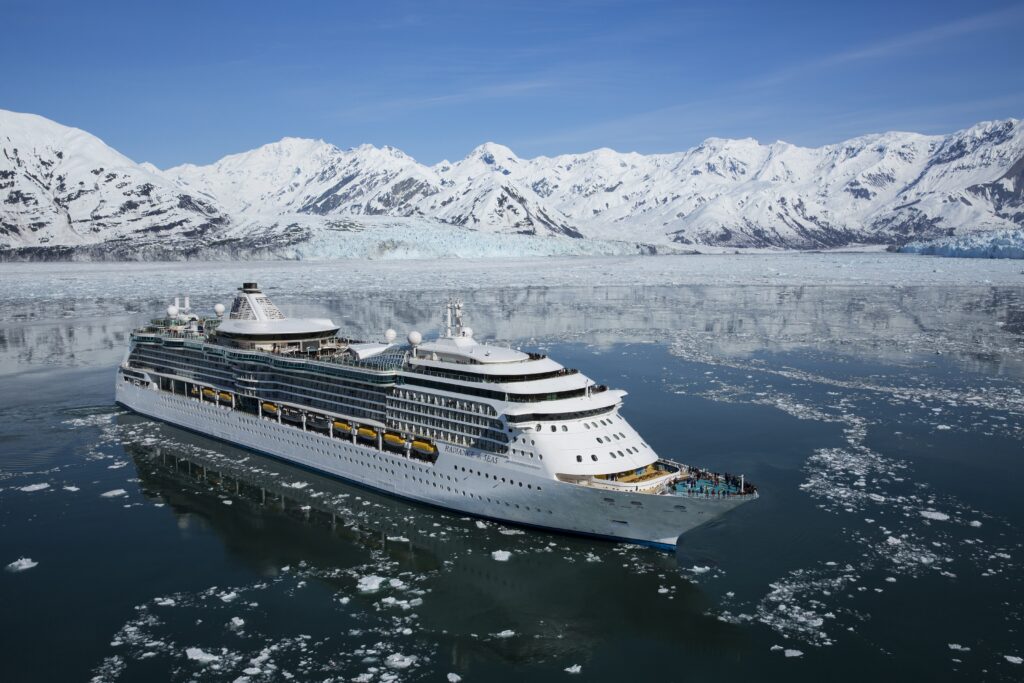
Introduced between 2001 and 2004, the Radiance Class consists of Radiance of the Seas, Brilliance of the Seas, Serenade of the Seas, and Jewel of the Seas. At approximately 90,000 gross tons, these ships are larger than their Vision Class counterparts but considerably smaller than the mega-ships that followed. Each vessel features approximately 1,070 to 1,100 staterooms and suites. The class’s defining feature is its open architecture, with expansive windows and numerous opportunities to enjoy panoramic ocean views.
Glass elevators, spacious sun decks, and a solarium featuring tropical landscaping create a distinctive onboard atmosphere. This design is particularly appealing on scenic itineraries, such as cruises to Alaska, where the surrounding landscapes are an integral part of the experience. Restaurants, bars, theaters, a casino, and sports facilities provide a wide range of vacation activities. The Radiance Class combines a traditional cruise experience with contemporary architecture and a strong connection to the sea.
The Voyager Class – The Beginning of the Mega-Ship Era
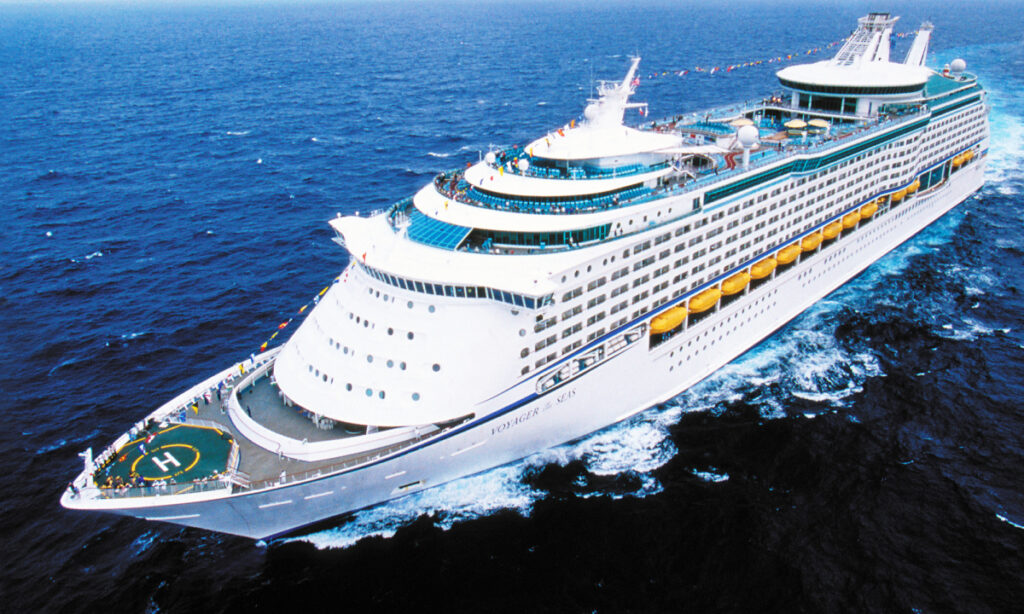
With the introduction of the Voyager Class in the late 1990s, Royal Caribbean ushered in a new era of cruise ship design. The five ships – Voyager of the Seas, Explorer of the Seas, Adventure of the Seas, Navigator of the Seas, and Mariner of the Seas – entered service between 1999 and 2003. Each measures approximately 137,000 to 138,000 gross tons and accommodates around 3,100 passengers at double occupancy.
One of the most significant innovations was the Royal Promenade. This multi-deck indoor shopping and entertainment boulevard runs through the center of the ship and is lined with stores, restaurants, and bars. It quickly became one of Royal Caribbean’s signature features and was subsequently incorporated into several other ship classes.
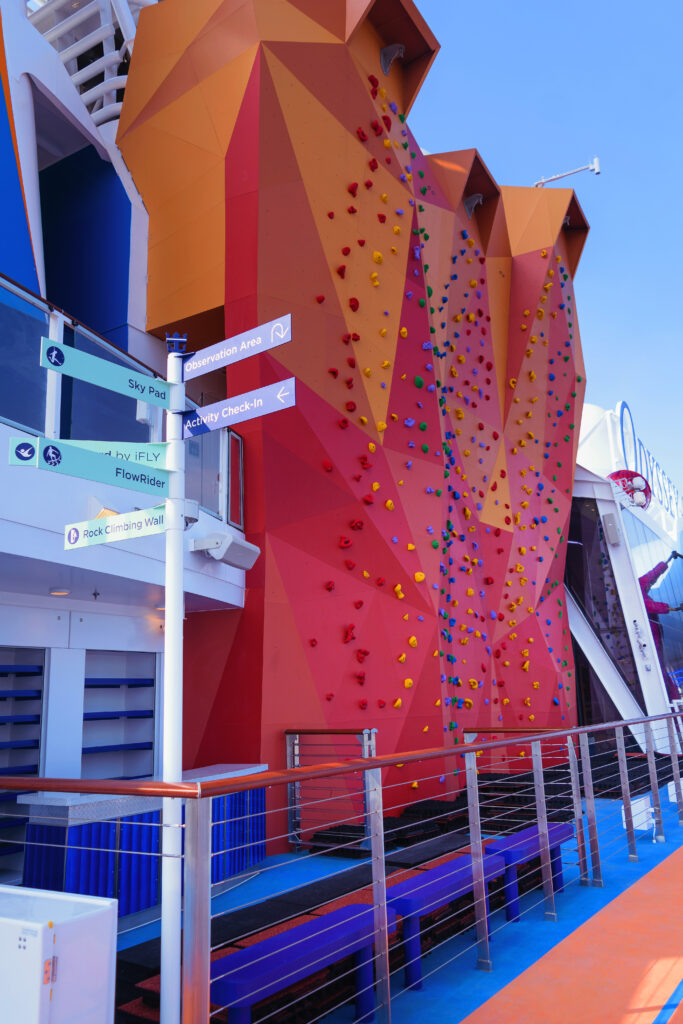
Onboard activities include rock-climbing walls, miniature golf courses, sports facilities, and Studio B, an ice rink where passengers can skate and watch professional ice shows. Additional entertainment options include theaters, casinos, nightclubs, and a variety of restaurants.
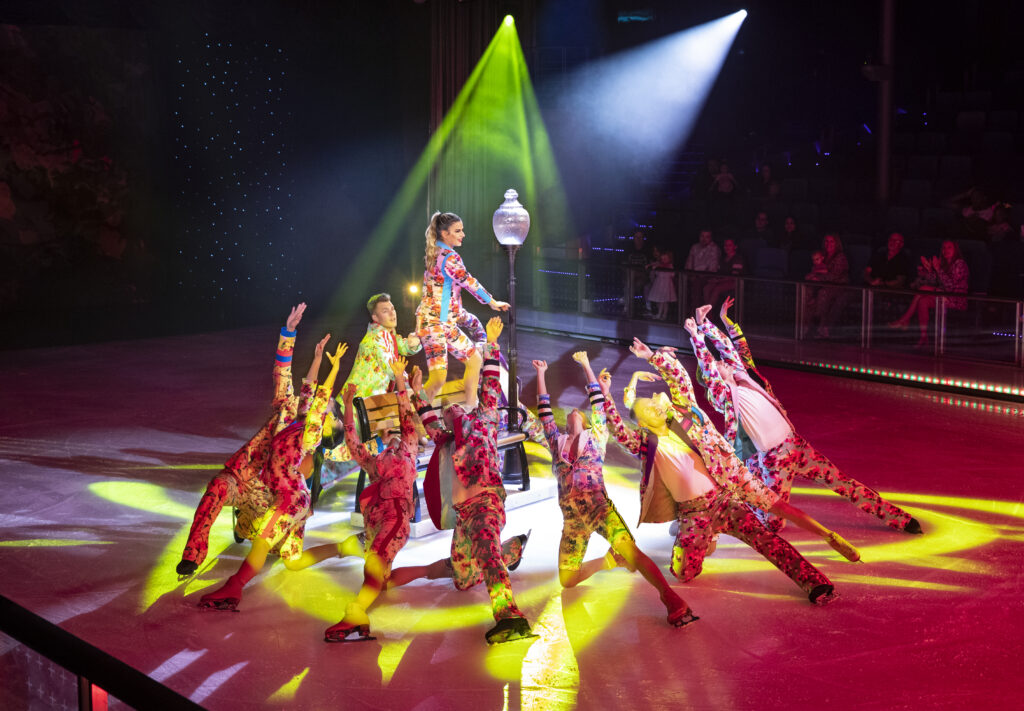
The Voyager Class was the first to demonstrate on a large scale that a cruise ship could become a vacation destination in its own right. The concept was designed to ensure that passengers would have plenty of entertainment and activities to enjoy, even on days spent at sea.
The Freedom Class – More Space and More Activities
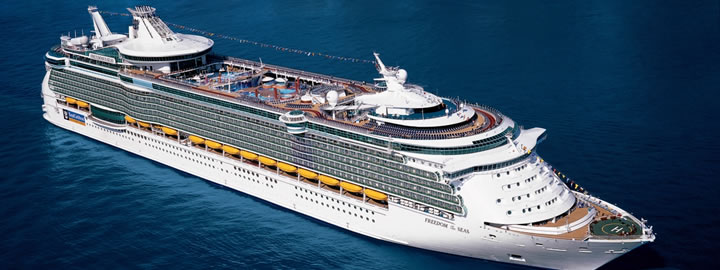
The Freedom Class took the Voyager Class concept a step further. It consists of Freedom of the Seas (2006), Liberty of the Seas (2007), and Independence of the Seas (2008). At approximately 154,000 gross tons, the ships were significantly larger than their predecessors when they entered service, accommodating around 3,600 to 3,800 passengers at double occupancy.
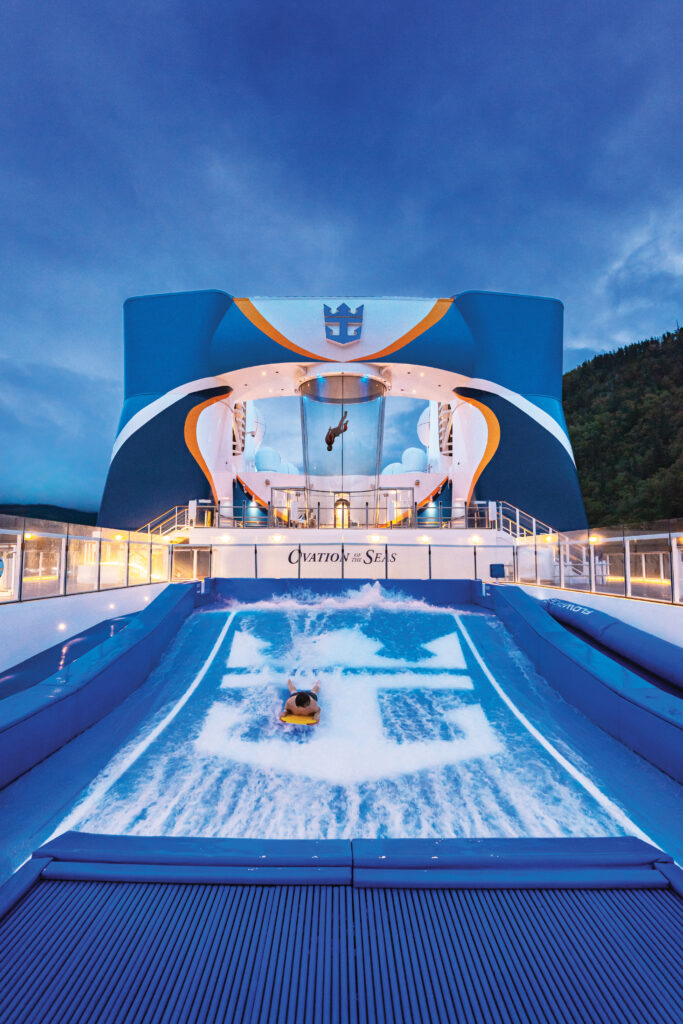
The ships retained the Royal Promenade while introducing additional recreational and dining options. The class became particularly well known for the FlowRider, a surf simulator that allows passengers to ride an artificially generated standing wave. Other attractions include expansive pool decks, whirlpools, water slides, sports facilities, rock-climbing walls, and an ice rink. The selection of specialty restaurants and bars was also expanded.
The Freedom Class represents a transitional step between the Voyager and Oasis classes. It combines an extensive range of onboard activities with a ship layout that remains relatively easy to navigate compared with the much larger vessels that followed. Some ships have received further upgrades through Royal Caribbean’s Royal Amplified modernization program. Freedom of the Seas, for example, underwent a major refurbishment in 2020. As a result, amenities and recreational facilities can vary considerably even among ships belonging to the same class.
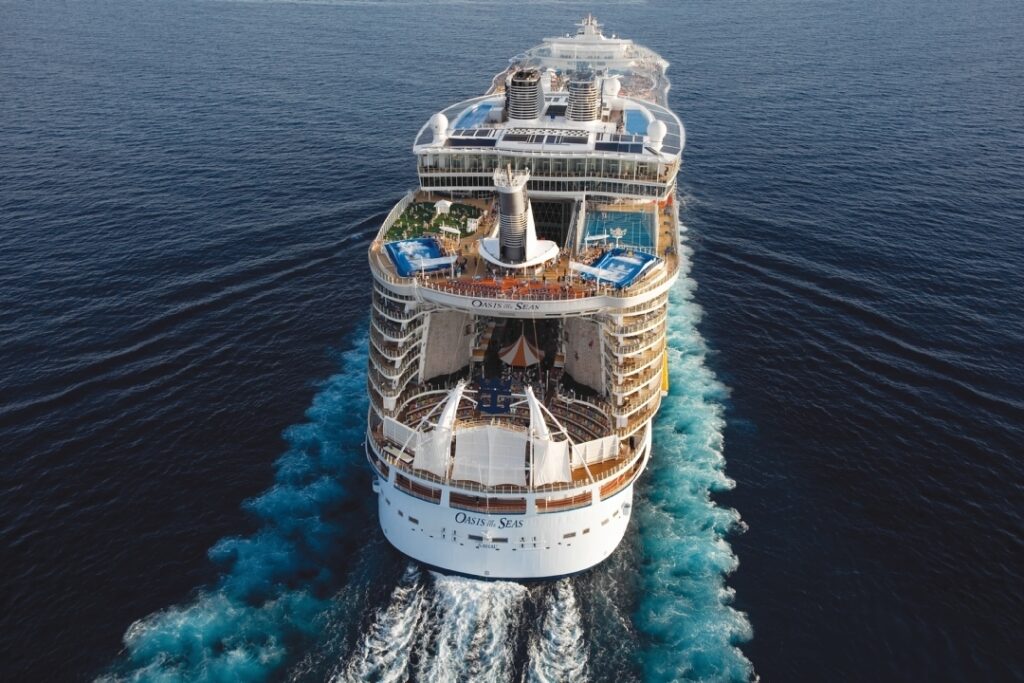
The Oasis Class – A Floating City
The introduction of the Oasis Class marked a major milestone for Royal Caribbean. These ships were designed as floating vacation resorts featuring distinct themed environments and a wide variety of experiences. The class includes Oasis of the Seas (2009), Allure of the Seas (2010), Harmony of the Seas (2016), Symphony of the Seas (2018), Wonder of the Seas (2022), and Utopia of the Seas (2024). A seventh ship is scheduled to enter service in 2028. The ships measure approximately 225,000 to 236,000 gross tons and accommodate more than 5,400 passengers at double occupancy. Depending on the ship and occupancy configuration, maximum passenger capacity is considerably higher.
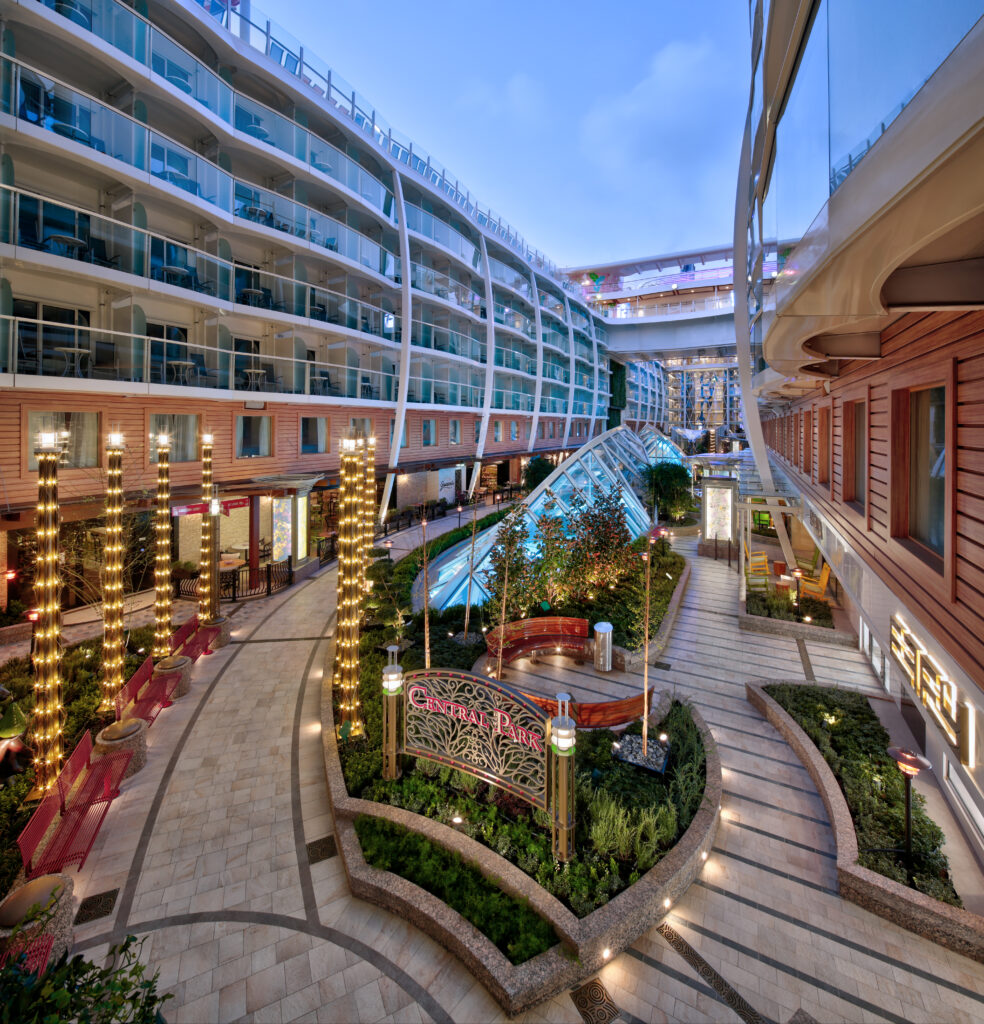
Wonder of the Seas – Royal Caribbean International
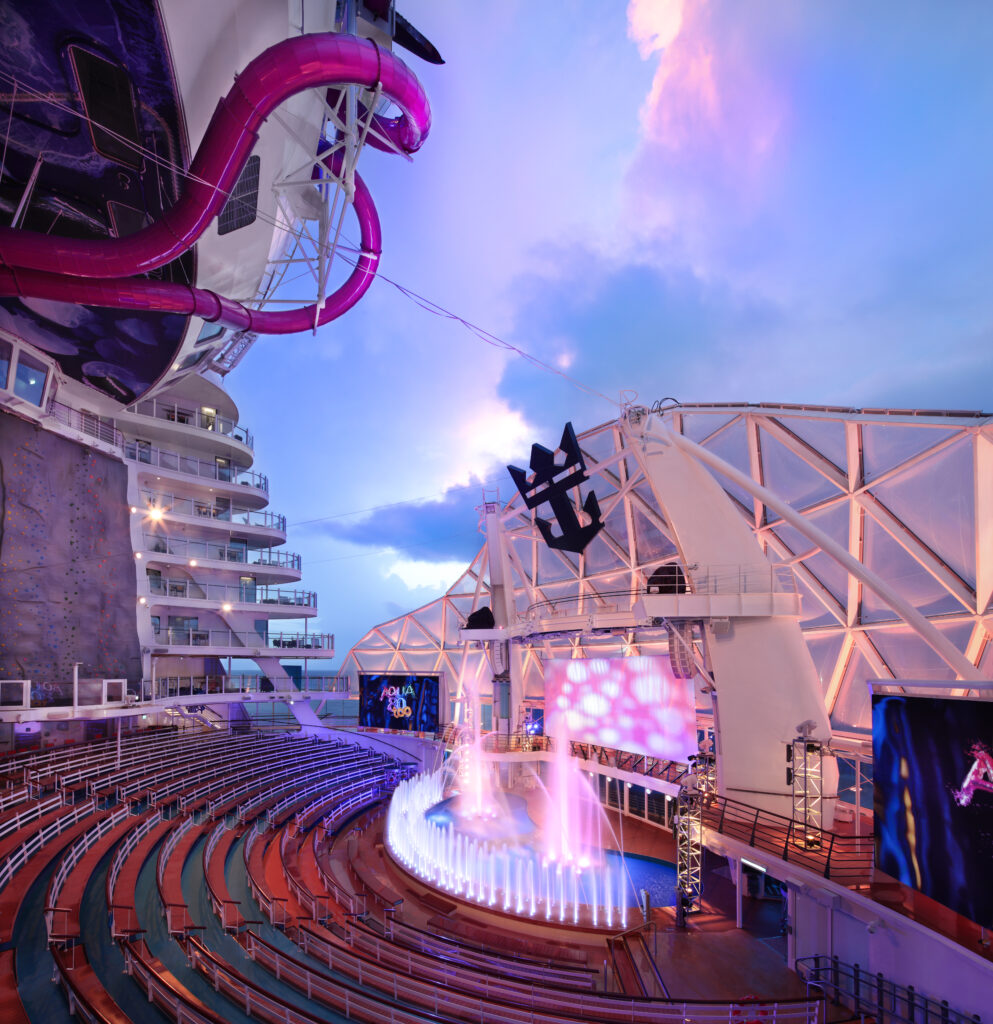
The defining feature of the class is its collection of themed areas known as neighborhoods. Among the best known are Central Park, the Boardwalk, and the Royal Promenade. Central Park is an open-air garden located in the heart of the ship, complete with live plants, trees, restaurants, and bars. The Boardwalk recreates the atmosphere of a traditional American seaside promenade and features attractions such as a carousel and various recreational activities. It is also home to the AquaTheater, where spectacular water shows featuring acrobatics and high dives take place. The Royal Promenade continues to serve as the ship’s central hub for shopping, dining, and entertainment. Large pool areas, theaters, and sports facilities round out the onboard experience.
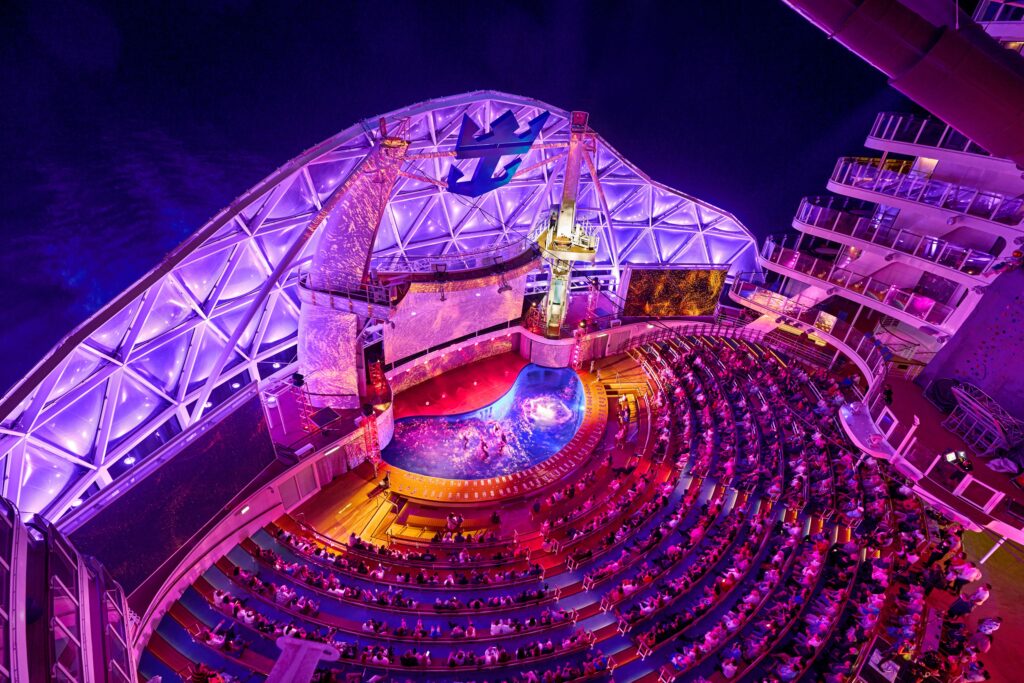
Additional attractions include the FlowRider, water slides, rock-climbing walls, miniature golf courses, and, on selected ships, the Ultimate Abyss, a massive dry slide spanning multiple decks. The dining program is equally extensive, combining traditional restaurants with a wide selection of specialty dining venues. Later ships, including Wonder of the Seas and Utopia of the Seas, introduced additional attractions and further refinements to the concept. The Oasis Class therefore represents a style of cruising in which the ship itself becomes the destination.
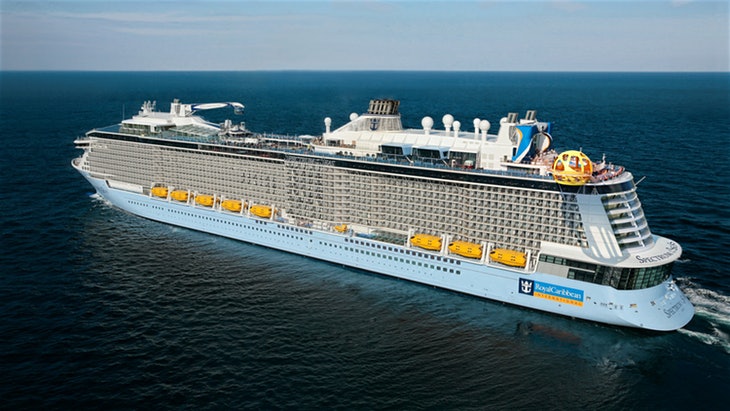
The Quantum Class – Technological Innovation
While the Oasis Class stands out primarily for its size and themed neighborhoods, the Quantum Class places a greater emphasis on technological innovation. It comprises Quantum of the Seas (2014), Anthem of the Seas (2015), Ovation of the Seas (2016), Spectrum of the Seas (2019), and Odyssey of the Seas (2021). The first three ships belong to the original Quantum Class, while Spectrum and Odyssey are enhanced variations of the design. At approximately 167,000 to 169,000 gross tons, the ships accommodate around 4,200 passengers at double occupancy.
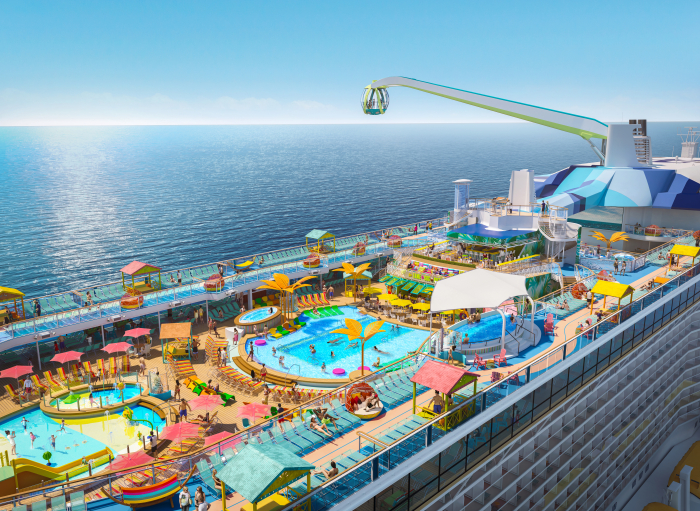
One of the class’s most recognizable attractions is the North Star, a glass observation capsule mounted on a movable arm. It can lift passengers to approximately 300 feet above sea level, offering panoramic views of the surrounding ocean and destinations. Another standout feature is RipCord by iFLY, an indoor skydiving simulator that recreates the sensation of freefall using a controlled column of air. SeaPlex is a large indoor recreational venue featuring activities such as bumper cars and basketball.

The Two70 entertainment venue combines floor-to-ceiling windows with advanced stage technology. Its windows can be transformed into multimedia display surfaces, providing a backdrop for elaborate productions featuring acrobatics and sophisticated visual effects. The Bionic Bar, where robotic bartenders prepare cocktails, is another distinctive feature. Dining options include specialty restaurants such as Wonderland, Izumi, and Chops Grille.
Spectrum of the Seas was developed with the Asian market particularly in mind and features, among other enhancements, an expanded selection of luxury suites. Odyssey of the Seas, by contrast, focuses on an updated pool deck and additional recreational facilities. The Quantum Class offers an alternative to the particularly large Oasis Class ships. Technological attractions, indoor recreational facilities, and innovative entertainment experiences take center stage.
The Icon Class – A New Dimension in Cruising
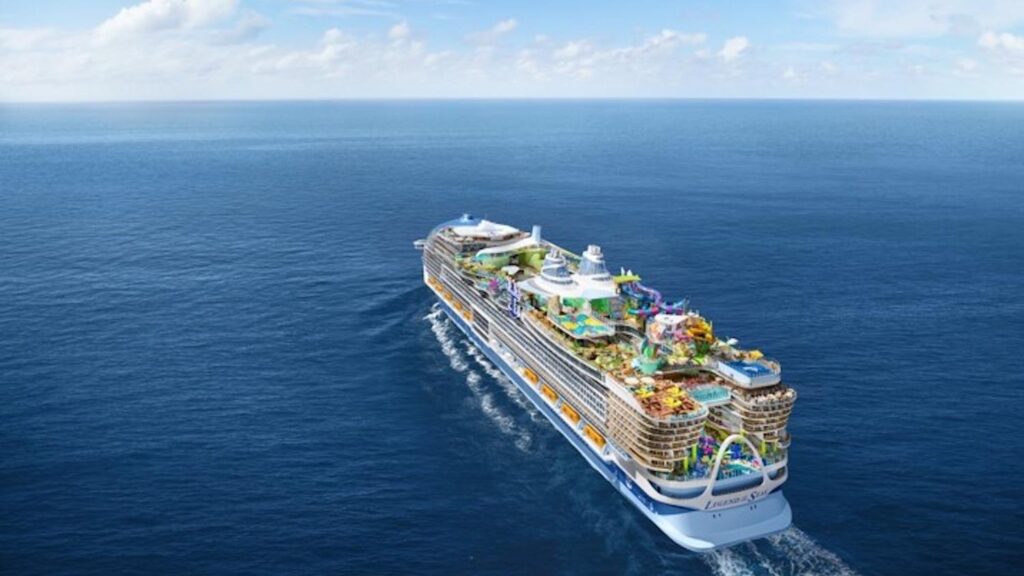
The Icon Class is Royal Caribbean’s newest and largest generation of cruise ships to date. It combines the features of a traditional cruise ship with those of a family vacation resort and a floating water park. The first ship, Icon of the Seas, entered service in January 2024. At approximately 248,600 gross tons, it ranks among the world’s largest cruise ships and accommodates around 5,600 passengers at double occupancy. Star of the Seas followed in August 2025, while Legend of the Seas joined the fleet as the third ship in 2026. A fourth vessel, Hero of the Seas, is scheduled for 2027.
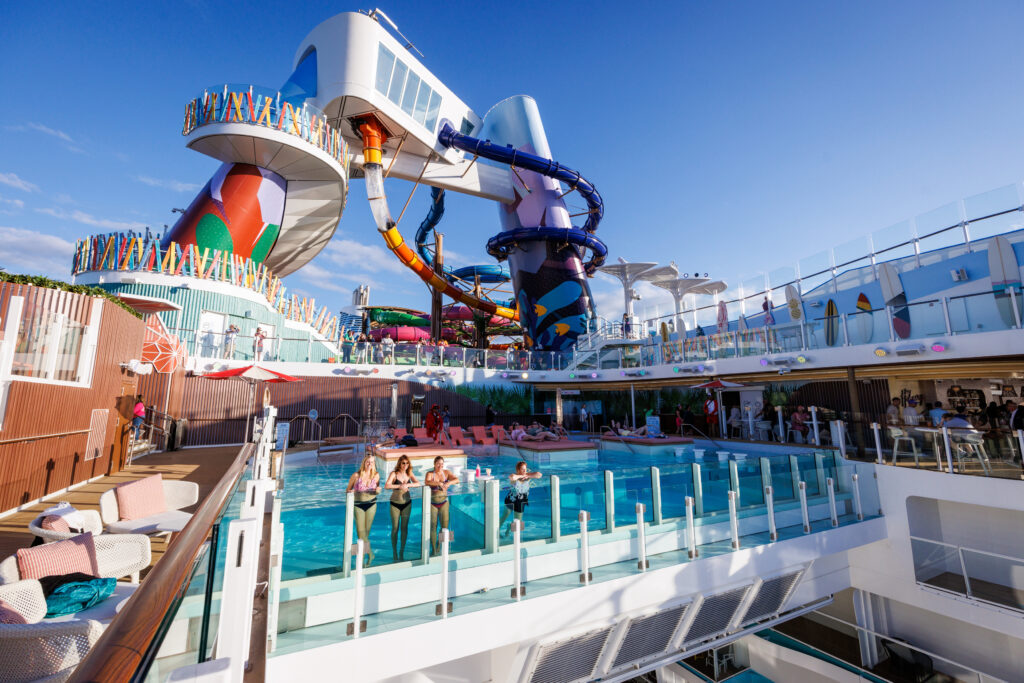
The concept is built around eight themed neighborhoods, each offering a different vacation experience. Thrill Island is home to Category 6, a water park featuring several large water slides and additional adventure attractions. Chill Island is dedicated to relaxation, with multiple pool areas and sun decks. Surfside is specifically designed for families with younger children and features age-appropriate water attractions, play areas, and restaurants. The Hideaway, by contrast, is reserved exclusively for adults and includes, among other features, an infinity pool.
One of the ship’s most striking architectural features is the AquaDome, a massive glass dome housing the AquaTheater, where elaborate water shows and acrobatic performances take place. Central Park, a familiar feature from the Oasis Class, has also been incorporated and further developed. The Royal Promenade offers an extensive selection of shops, restaurants, and entertainment venues. A dedicated suite neighborhood adds another layer to the onboard concept. On Icon of the Seas, the dining program includes more than 40 places to eat and drink. Entertainment options include ice shows, theatrical productions, live music, and a wide range of family activities.
From a technological perspective, the ships use liquefied natural gas (LNG) as fuel and are equipped with shore power connections. These measures are intended to reduce environmental impacts, although they do not make the ships emissions-free. With the Icon Class, Royal Caribbean has brought together many of the experiential elements introduced on its Oasis Class ships and developed them into an even more comprehensive vacation resort concept. Families, in particular, are a key target audience, with an exceptionally diverse range of activities and entertainment options available to guests of all ages. Further newbuilds are planned. Royal Caribbean has also announced the Discovery Class, with the first ship expected in 2029.
The Evolution of Royal Caribbean’s Ship Classes
The development of Royal Caribbean’s fleet illustrates how dramatically the cruise industry has changed over the past few decades.
The Vision Class represents traditional cruising aboard comparatively smaller ships, while the Radiance Class stands out for its open architecture and extensive use of glass. The Voyager Class marked the beginning of large-scale onboard entertainment and themed public spaces. The Freedom Class expanded these recreational offerings even further. With its distinctive neighborhoods, the Oasis Class increasingly transformed the ship itself into a vacation destination. The Quantum Class added a new dimension through technological innovations such as the North Star observation capsule and the indoor skydiving simulator. Finally, the Icon Class combines many of these concepts in an especially extensive family-oriented resort experience.
Royal Amplified – Modernizing Older Ships
An important part of Royal Caribbean’s fleet strategy is its Royal Amplified modernization program. The initiative aims to bring older ships closer to the standards of newer vessels while extending their operational life. Refurbishments can include renovated restaurants and bars, redesigned pool decks, and the addition of water slides and other recreational attractions. The specific upgrades vary from ship to ship.
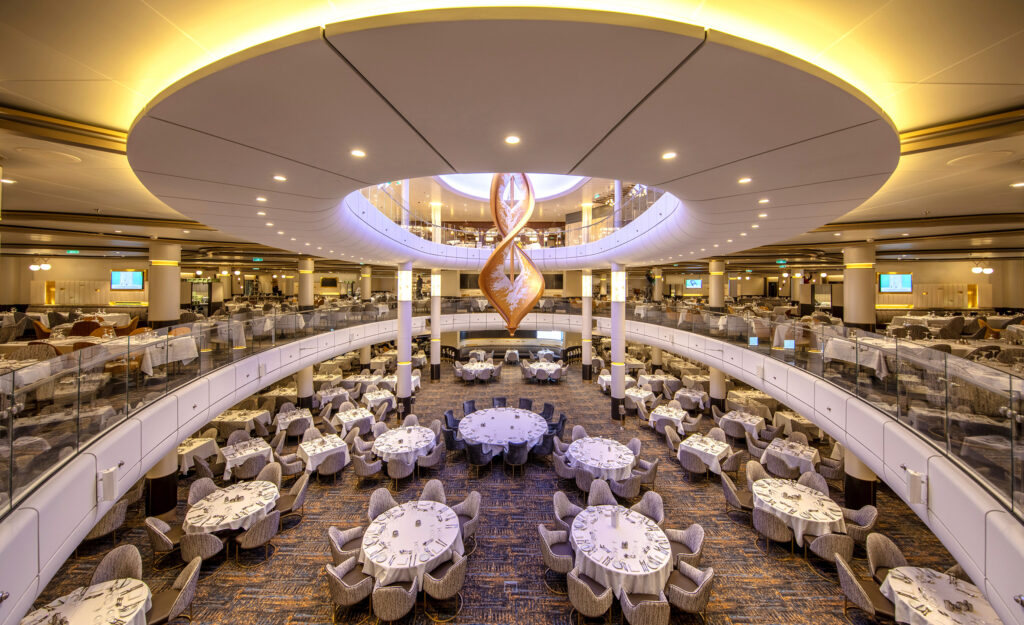
Examples include the refurbishment of Oasis of the Seas in 2019 and the modernization of Freedom of the Seas in 2020. Navigator of the Seas also received additional recreational facilities and dining options. However, even extensively refurbished older ships cannot fully replicate the architecture and onboard amenities of a newly built vessel. The original design and layout continue to distinguish each ship, regardless of subsequent upgrades.
Which Royal Caribbean Ship Class Is Best for Your Vacation? A Cruise Line Offering Different Types of Vacation Experiences
In just a few decades, Royal Caribbean has evolved from a traditional cruise line into an operator of enormous floating vacation resorts. Its different ship classes demonstrate just how varied a cruise experience can be.
While the smaller ships offer a more traditional style of cruising, the Voyager and Freedom classes place greater emphasis on extensive recreational facilities and onboard entertainment. The Oasis Class stands out for its themed neighborhoods and diverse attractions, the Quantum Class for its technological innovations, and the Icon Class for its exceptionally comprehensive family and resort concept. This diversity allows Royal Caribbean to appeal to a broad range of travelers. Those who prefer a more traditional cruise experience may find the smaller ships particularly appealing. Families and vacationers looking for an extensive selection of entertainment, activities, and amenities, on the other hand, may get the most out of the Oasis and Icon Class ships.
Ultimately, it is this variety of ship designs and vacation concepts that makes Royal Caribbean and its fleet so distinctive.
 Carnival Sets Its Sights on Smaller Ship Classes
 Where Is the Best Cabin on a Cruise Ship When the Seas Get Rough?
 Seasickness: When the Waves Turn Your Stomach Upside Down